OPIOID CRISIS ROUNDUP: SETTLEMENT $$ TO HARM TRIBES; OREGON LEARNS NOTHING FROM DECRIMINALIZATION FAIL; EMTs PASS OUT STREET CURRENCY FOR FENTANYL TO HIGH-RISK USERS
Woke embrace of evidence-free tribal cultural “treatments” is tragically lethal, no more so than Oregon’s commitment to failed expert “treatments” predictably rejected by high-risk users during decriminalization. Can you top that? EMTs in Maine are trying.
by Clark Miller
Published July 17, 2026
What could be cooler and more woke than funding with opioid crisis settlement dollars native ceremonies that totally cure opioid dependence? Those historical re-enactments are actual treatments, right? Like sweat lodges? And native drumming, burning sage, tribal dancing? What could be more therapeutic for the life-threatening condition of compulsive opioid use than involving young persons trapped on cultural islands in anachronistic customs, in costume, to shape their identities as if it were the year 1492? At least it pleases the elders, or satisfies some deep, unrevealed need. While all those kids on the Rez want and need to do is freely pursue lives in the contemporary world and escape cultures and families of severe alcoholism, drug use, trauma and abuse?
It must be similar for members of white European cultures trapped in high-risk opioid and other drug use, right? Disconnected from their cultural roots of riding, roping and branding, the therapeutic benefits lost to them and yet preserved in rodeo bull riding, bronc busting, and the square dance with prayer and communion on Sunday. So many have lost their way and turned to drug use. And yet, no settlement dollars for wagon-train re-enactments? Or blacksmithing? Tent revivals?
And what could be more predictable than tribal leaders and media anguishing over astonishingly high rates of youth suicide while tribal youth are guilted and shamed against escaping?
Okay, I’ll stop with that. But, having seen directly what is happening on reservations – as a behavioral health and addiction clinical supervisor in a tribal program – I will not join the pretense.
I’ve seen what’s happening in the tribal families, culture, and addiction treatment programs, and I won’t shut up about it. There’s too much at stake, too much harm being done, too much wasted.
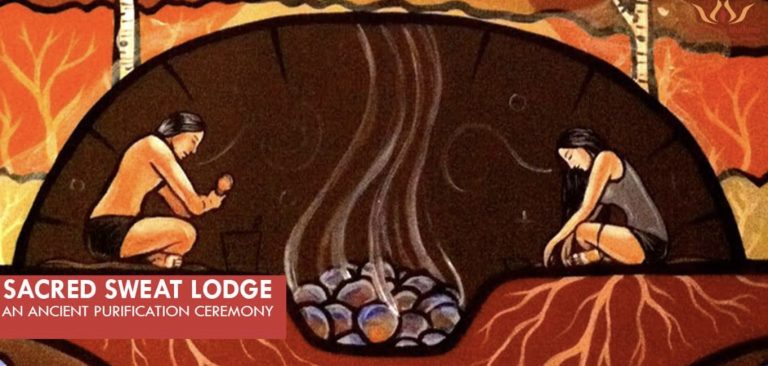
Let’s start with the hard facts. There are no bodies of evidence
now, nor have there ever been, to support benefits for problem substance use attributable to tribal cultural practices. Not for sweat lodge, nor for burning sage, nor for tribal dancing, nor for drumming, nor basket weaving (yes, that’s been asserted). None of that. Not remotely. No more than equine “therapy”.
You will be informed that there is evidence for benefit from those practices, assured by credentialed, esteemed know-nothings. Just as you have been told that Covid came from a source in nature, that pandemic school shutdowns were necessary, that depression is a medical condition with medical treatments, that an evil pharmaceutical-owning family helped fuel the opioid crisis, and that there are medications to help treat compulsive substance use.
Those tribal sham traditional practices as “treatment” have all been lavishly funded and implemented for decades, and the severity of substance use, domestic violence, and suicide on reservations doesn’t seem to have benefited.
Has it? Have you taken a look?
But none of that is going to get in the way of tribal leaders, impaired media, and funders from celebrating the conspicuous performance and wokeness of it all.
It is worth prefacing an exploration of these trends by noting one of the most compelling and foundational ethical and clinical obligations for all behavioral health, “addictions”, and other healthcare professionals providing models of care for their patients. It is the requirement, not only that there be evidence of benefit from what is offered, but also that the patient is freely seeking the specific therapy, with the informed belief that it will benefit the complex, life-threatening condition of high-risk substance use that arose while immersed in a closed culture of those historical practices, present, celebrated, and encouraged in tribal life for decades over the early and adult lives of the high-risk drug users.
More to the tragic, lethal point, many tribes have been awash with funds, tribal monetary resources, for decades and decades, available to develop healthcare programs on reservations to serve tribal members. In the Pacific Northwest, it is often a casino that generates a large source of income.
For the tribes I worked with and was familiar with, a couple of decades ago, there were essentially unlimited funds available to support the revitalization of historical traditions as “treatments”, everything from the construction of expensive cultural centers (rather than desperatly needed housing that is not substandard) to drumming to traditional dancing to smudging and sweat lodges to traditional foods (that may be less healthy than you imagine) to use of teepees and other traditional structures, and more.
Those were well funded at the time and in place, tribal members engaged in substance use treatment strongly encouraged (strongly, as in shamed for not engaging in those archaic practices) to use and view the practices as “treatment”, as healing for high-risk substance use.
Do you believe that over the past decades of support for those traditional practices, tribal trends in drug-related deaths, dependence, suicide, mental health problems, domestic violence, or exposure of children to ACE have moderated or improved?
I encourage you to research that.
But let’s take a look at an example of a celebratory news piece outlining how millions will be spent on the evidence- and benefit-free practices.
TAHLEQUAH, Okla. (AP) — Culture is vital for recovery. That’s a lesson Juli Skinner, a citizen of the Ponca Tribe of Oklahoma, learned during her time in foster care, years later working in child welfare and now, as the senior director of the Cherokee Nation’s behavioral health center.
Tribal traditions have given her a healthy way to self-regulate and strengthen her connection with Spirit.
“Culture is such a protective factor,” Skinner said. “Historical trauma has hit a lot of people — Native Americans, tribes — hard. Lost language, lost traditional ways, and we’ll never get all of that back.” ..
Cherokee Nation plans to open a residential and intensive outpatient treatment center in Tahlequah, where the tribe is headquartered. It will incorporate centuries-old traditions into recovery, including the game of stickball and an on-campus garden to grow selu, or corn.
Money for the facility comes from the roughly $150 million the tribe recovered through settlements with opioid manufacturers. The 45,000-square-foot (4,180-square-meter) campus will have 100 inpatient beds and an outpatient hub with follow-up support. …
Principal Chief Chuck Hoskin Jr. said Cherokee leaders wanted to take an active role in opioid litigation after missing the chance to do so during a similar series of lawsuits against tobacco companies in the late 1990s.
“There will never be another era in which there’s some industry that does damage to the Cherokee Nation, damage to the Cherokee people, where we will be bystanders looking for state legislatures, state attorney(s) general to get us justice,” he said. …
Culture is integrated into every part of the new treatment center’s design. While choosing the layout, the tribe hosted listening sessions with community members and elders. Cherokee language experts are finalizing a name for the center.
The facility has large windows that offer a view of rolling hills and grazing cattle. It faces the east to greet the rising sun and is a short drive from a sweat lodge. Residential patients will also have access to a stickball court, garden space for traditional foods, a gym and room for meditation. …
[emphasis added]
Here’s another account, from KFF Health News, describing itself as “a national newsroom that produces in-depth journalism about health issues.”
We learn right away, in the headline, that there is “traditional healing” that will “treat addiction”.
PRESQUE ISLE, Maine — Outside the Mi’kmaq Nation’s health department sits a dome-shaped tent, built by hand from saplings and covered in black canvas. It’s one of several sweat lodges on the tribe’s land, but this one is dedicated to helping people recover from addiction. ..
The experience can be “a vital tool” in healing, said Katie Espling, health director for the roughly 2,000-member tribe. …
To some people, the lower payout for tribes corresponds to their smaller population. But some tribal citizens point out that the overdose crisis has had a disproportionate effect on their communities. Native Americans had the highest overdose death rates of any racial group each year from 2020 to 2022. And federal officials say those statistics were likely undercounted by about 34% because Native Americans’ race is often misclassified on death certificates.
Still, many tribal leaders are grateful for the settlements and the unique way the money can be spent: Unlike the state payments, money sent to tribes can be used for traditional and cultural healing practices — anything from sweat lodges and smudging ceremonies to basketmaking and programs that teach tribal languages.
“To have these dollars to do that, it’s really been a gift,” said Espling of the Mi’kmaq tribe. “This is going to absolutely be fundamental to our patients’ well-being” because connecting with their culture is “where they’ll really find the deepest healing.”
Public health experts say the underlying cause of addiction in many tribal communities is intergenerational trauma, resulting from centuries of brutal treatment, including broken treaties, land theft, and a government-funded boarding school system that sought to erase the tribes’ languages and cultures. Along with a long-running lack of investment in the Indian Health Service, these factors have led to lower life expectancy and higher rates of addiction, suicide, and chronic diseases.
[emphasis added]
Let’s consider a couple of the most relevant points and themes.
Historical or intergenerational trauma – used in the excerpts above and generally in tribal assertions for persistent, exceedingly high rates of family dysfunction, domestic violence, suicide, substance abuse, and other negative health measures as driven by genetic and/or epigenetic transmission of factors activating trauma symptoms and effects originating generations ago during the genocidal and otherwise traumatizing colonization, displacements, and other depredations of European settler cultures.
The confidence and energy with which this fabricated mode of transmission of trauma effects has been asserted as true, pushed forward, and accepted is nullified by the absoluteness of its invalidation by lack of evidence or a tenable biological model for its existence. It is a very successful fabrication. And it is not a thing. Those points are made much more graciously in this 2018 review of the evidence and history of the generation of the fiction.
In addition to there being no evidence to support such a biological mechanism by which the real trauma effects on displaced and colonized distant ancestors would be transmitted to be present and activated in newborn descendants, independently, the explanation for current trauma symptoms and effects with associated risks and health outcomes is sufficiently nullified simply by the fact that while new generations in that ancestral line exhibit disproportionaltely very high incidence of trauma-related problems, not all do.
There is another force that independently – by virtue of its being established, known, supported by extensive bodies of research, with known mechanism – nullifies the biological intergenerational trauma effects fiction: the disproportionately high incidence of traumatization of children by the behaviors of parents, older siblings, and other adults in their lives, generating trauma effects anew each generation. No one who has worked with tribal populations could plausibly deny that this is the case.
These types of generalized, predictable, pervasive effects of parent behaviors on traumatization of children, in this case related to parent opioid abuse, were outlined and considered in a recent post.
We’ll explore the deeper forces and meaning of these expensive, lethal fabrications in an upcoming post, “IDEALIZATION OF CULTURE AND COMMUNITY AS CURES FOR SUBSTANCE USE AVOIDS FACING THEIR ROLES AS CAUSES”.
Their necessary generation is rooted in the Freudian defense mechanism of reaction formation – demonstrative, persistent, exaggerated expression of an opposite, of the fiction “Our ways are the cure” to hide the truth that our ways are the cause, that our abject failure to face and stop the exposure to violence and other traumatizing experineces in our families that set children up to become the next generation of high-risk drug users.
The same fiction, as reaction formation, to hide the lethal lies that Our ways are the cure in the promotion as cure for high-risk drug use of medical treatments, of “community“, of religious practice, of “peer support“.
Let’s move on to Oregon,
where state leaders and experts are celebrating the allocation of $millions in settlement funds to the same lethally failed “treatment” approaches that were revealed, starkly, to have failed over the doomed experiment in decriminalization.
That experiment failed predictably even after high-risk opioid and other street drug users were provided assurance and protection from criminal justice involvement for possession or use, instead invited and encouraged, without pressure or threat, to engage in Oregon’s model of expert treatment.
That was the problem, of course, those sham “treatments” established as predicting harm and more deaths, as described generally and in a series of posts on the Oregon experiment here,
and here
and here
and here
and here
and here
and here
and here
and here.
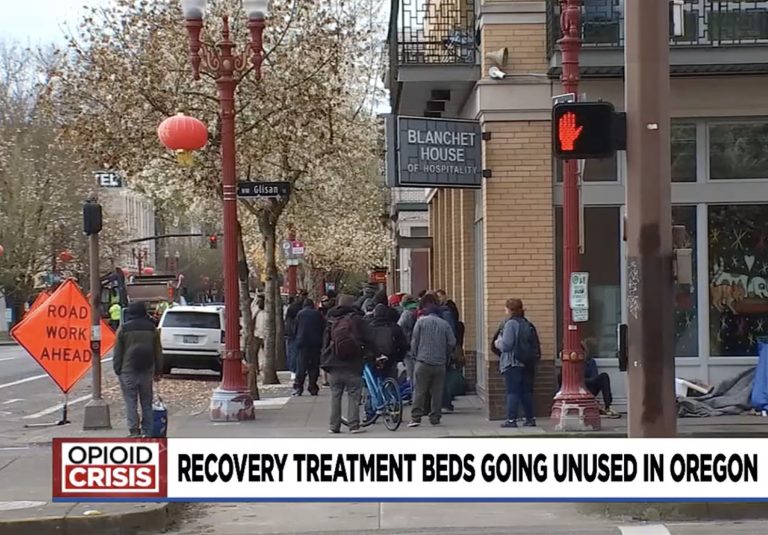
There were no takers
that is, as many readers will recall, among the thousands of Oregon high-risk opioid and other drug users encountered by law enforcement or EMT services and encouraged to easily access treatment – at no cost to those who could not have paid – essentially none followed through.
Why would they? They’ve been in “treatment” and know it’s a useless sham and scam, is not helpful, never has been. They know that they can use fentanyl or other powerful opioids along with any Suboxone or “game-changer” Sublocade they might be on to get high; the buprenorphine doesn’t prevent that. They know that when they need some “bupe”, some “subs” to take a break from then return to their fentanyl use, buprenorphine is one of the most available, cheapest, safest street drugs to come by. It’s never helped them to sit in a group, led by someone not remotely qualified to provide treatment of any kind, and “process”, or in the meeting of a bizarre religious subculture, to engage in self-denigration (“I am an addict”) and magical thinking. That is to say, they exercised sound judgment in declining.
My take on Twitter –
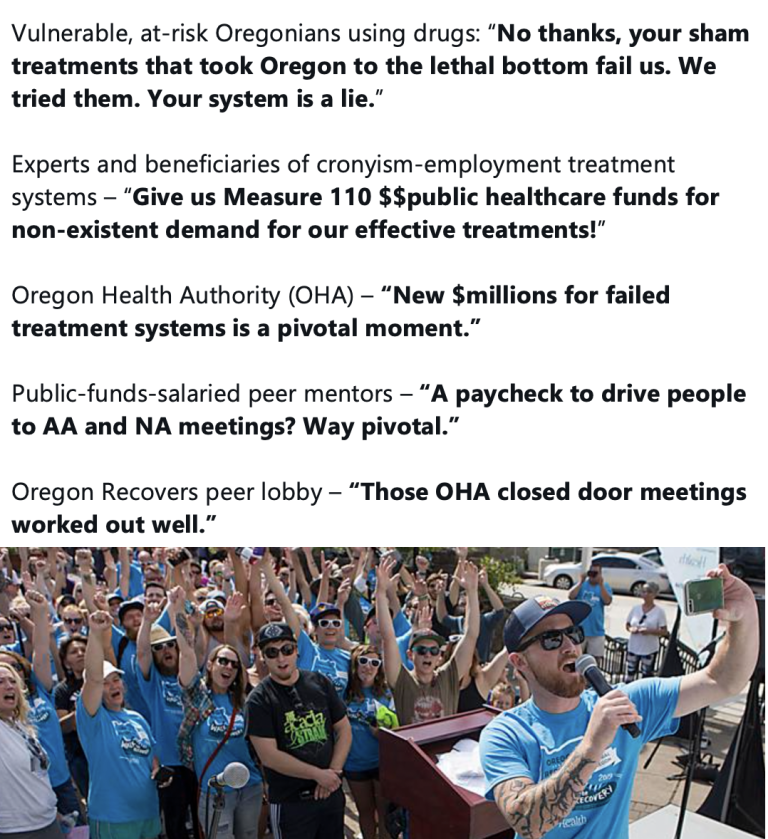
Let’s move on to Maine,
where expert and media assurance that expansion of those expert treatment approaches, in a nationwide trend, is sure to provide gains against the worsening crisis.

WESTBROOK, Maine —
The Westbrook Fire Department has announced that it has received state approval to provide Suboxone, the medication used to treat opioid use disorder.
This is part of a statewide pilot program to address the ongoing opioid crisis. Paramedics will now be able to help patients experiencing an overdose and those who are having withdrawal symptoms. …
“The ability to initiate medication-assisted treatment in the field and rapidly transition patients into comprehensive addiction services is expected to significantly improve the chances for long-term recovery success,” said Westbrook fire Chief Stephen Sloan.
[emphasis added]
That sounds great! And conveyed with reassuring confidence. No wonder the opioid crisis is moving in the direction it is now.
There are some problems, though, and our understanding of those problems has been established for some time now. Suboxone (buprenorphine) has never been evidenced as providing benefit for compulsive opioid use; instead, its lethal failure is established as fueling high-risk opioid use.
Allowing EMTs to dispense the known, common street currency for fentanyl has had consistent, predictable results.
It’s as if there are irremediable drives for necessary gains from furthering lethal medical misinformation, no matter the costs.