OPIOID CRISIS MISINFO ROUNDUP: THINK TANK TANKS; ONTARIO, CANADA ADOPTS AMERICA’S LETHAL MISINFORMATION MODEL; SOOTHING MEDICAL LIES ARE THE NEW FENTANYL
Medical misinformation is everywhere, an unquestioned, soothing anesthetic and constructed consensus without which the lethality of expert, gold-standard “treatment” is painfully exposed
by Clark Miller
Published July 31, 2026
R Street describes itself this way –

More than an American Think Tank, R Street is a leading think tank.
That tells us something.
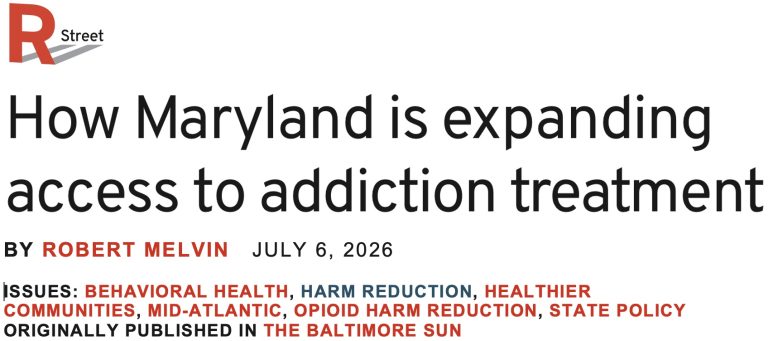
R Street has important, leading research, thoughts, and conclusions to share about the opioid crisis and the effective approaches being taken by experts in Maryland.
Which is easier to obtain in Maryland: illicit opioids such as fentanyl, or a prescribed medication such as buprenorphine used for treating opioid use disorder? The answer may surprise you. In many cases, accessing buprenorphine is actually more challenging. While illicit opioids are widely available, those seeking treatment often face delays, limited appointment availability and a shortage of nearby providers. …
With 969 opioid-related deaths reported in Maryland this year, lawmakers have rightly identified access to this treatment as a major public-health issue. The legislation reflects a broader recognition that low-barrier, rapid access to these medications saves lives.
Moreover, the bills build on other previous bipartisan efforts to expand access through telehealth prescribing, state-mandated treatment of opioid addiction in jails, establishing the buprenorphine training grant program for EMT administration and directing hospitals to offer rapid access to medications. Each of these policies represents one step in a broader effort to curtail the opioid crisis. …
The tangible costs of opioid addiction for Maryland taxpayers are estimated at over $2.2 billion in healthcare and criminal justice expenses annually, as well as lost productivity of those addicted to illicit opioids. Therefore, expanding access to evidence-based treatment is a sensible solution from a fiscal perspective as well. Patients receiving this medication are 60% less likely to experience overdose. …
While some opponents worry that expanding access could lead to buprenorphine being distributed outside normal medical channels, such cases are relatively rare. When this does occur, it is often because people are trying to manage withdrawal symptoms because formal care is inaccessible. Even in those uncommon situations where people obtain buprenorphine outside the medical system, it is still far safer than illicit opioids like fentanyl and has been linked to lower overdose risk.
[emphasis added]
Here’s what we know
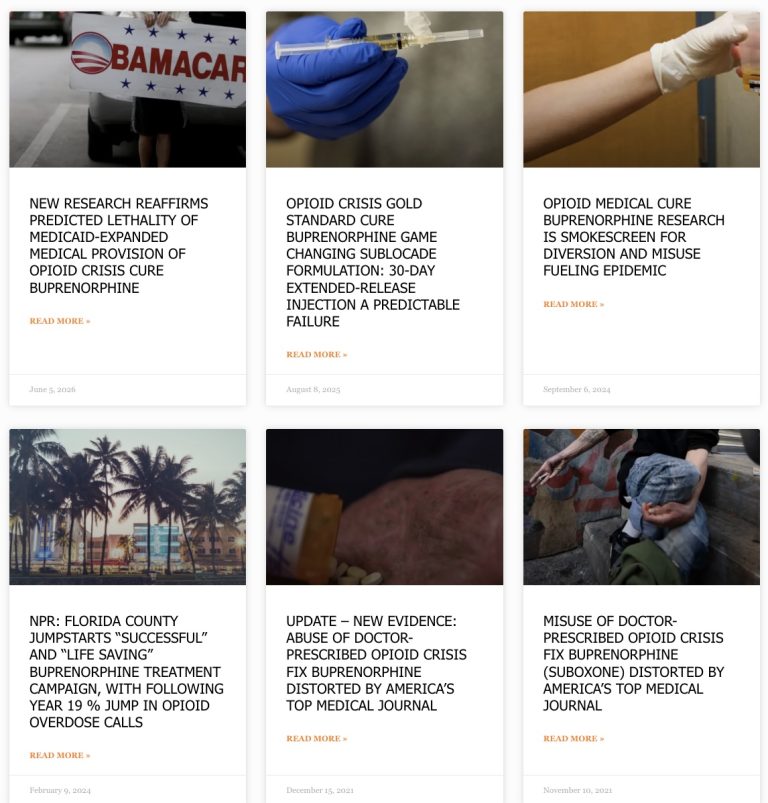
Far from being difficult to access, buprenorphine has been known and established as one of the most widely and easily obtainable diverted drugs in street and community economies of illicit opioid and other drug use, functioning as a consumable, commodity, and currency. That’s described in multiple posts here at ACD, for example here and here and here.
“Those seeking treatment often face delays”? What “treatment”? The alleged, “evidence-based” benefit that “saves lives” comes entirely from ingesting the pills or sublingual strip, providing the rationale for prescribing by telehealth and “low-barrier” access. If “bupe” works, it works by simply using it daily, is no more complicated than that.
The fastest, lowest-barrier, most reliably available access to “subs” – cheap and safe – is getting it from the same sources other illicit drugs are obtained from in a high-risk user’s neighborhood, available 24/7 in any community. The scarcity rationale for the established lethal failure of buprenorphine is a demonstrable lie. If your cousin could get the diabetes medication he needs to stay alive and well easily, safely, cheaply, 24/7, in his community, as he could buprenorphine if he needed it, from the same guy he scores his ketamine from, we would be, like the thought leaders useful idiots at R Street, lying to say that accessing his life-saving medication is “challenging”.
Saves lives? It turns out that there has never been a body of evidence to support that fabrication, studies consistently confounded by the predictable association of provision, training, and proximity to possession, use, and reversal of potentially fatal overdoses by naloxone for anyone accessing buprenorphine from medical or treatment program involvement and visiting pharmacies to get it. To claim it was the buprenorphine requires ruling out that it was the associated provision and proximity to life-saving naloxone instead.
Instead, evidence consistently establishes buprenorphine (and methadone) as fueling the lethal crisis. The more those substitute opioids are provided, the more lethal the outcomes and course of the crisis, as we saw for Baltimore.
In jails and prisons? The outcomes have been predictable. See also here and here and here.
“EMT administration” of the common street currency for fentanyl, aka “buprenorphine”? That’s been tried too, with consistent, predictable outcomes.

If your cousin could get the diabetes medication he needs to stay alive and well easily, safely, cheaply, 24/7, in his community, as he could buprenorphine if he needed it, from the same guy he scores his ketamine from, we would be, like the thought leaders useful idiots at R Street, lying to say that accessing his life-saving medication is “challenging”.
And “telehealth prescribing“? Sure, why not? What could go wrong?

Let’s move on,
to Ontario, Canada, where runaway high-risk opioid use and overdoses persistently surge, seemingly the more expert treatments are provided.
That’s what we get from Canada’s major media reports.
While the data doesn’t show what’s behind the increases, researchers, health-care workers and advocates suggest the toxic drug supply and the closure of supervised consumption sites (SCS) in the past two years may be factors.
“the data doesn’t show what’s behind the increases”
Researchers can only suggest … it could be this … or that.
No one can say.
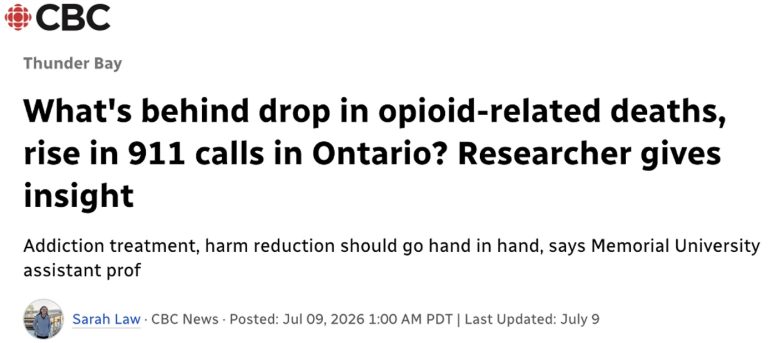
A public health researcher who focuses on Canada’s addictions crisis cites several factors for why opioid-related death rates are declining yet 911 calls have risen in Thunder Bay and several other Ontario cities, some of the findings in a new CBC data analysis. …
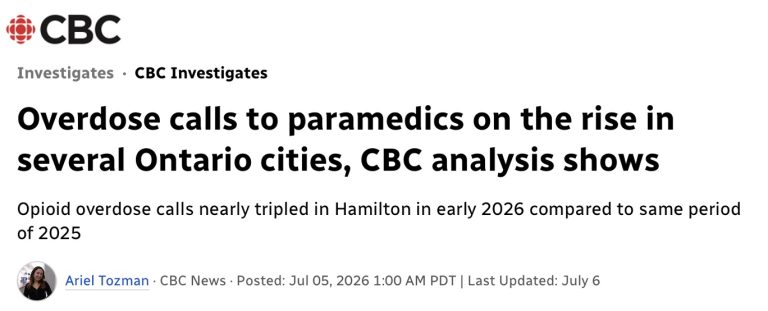
The data analysis indicates that while provincial and national opioid-related death rates have dropped, paramedics have received more calls about overdoses related to the drug in Ottawa, Toronto, Hamilton and Thunder Bay.
[emphasis added]
What’s behind the drop in OD deaths, while high-risk use and overdose increase?
Researchers can only offer insight … cite several factors… it could be this … it could be that.
No one can say.
The evidence and expert and media reports are mystifying.
Here’s what we know
We know that it’s an unanswered question and that NO ONE CAN SAY precisely because it is entirely clear what these trends represent – the lethal failure of North American expert gold-standard treatment – and exposure of those truths is forbidden to protect the sham treatment industries, media/medical collusion and expert class responsible for a worsening crisis.
Here’s how we know it,
outlined in the takeaway points from this recent post on opioid crisis trends in Ontario.
TAKEAWAYS
In Ontario, Canada, increases in opioid high-risk use and overdose are generalized and province-wide, reported within supervised consumption sites, outside of them in public spaces, on timelines that rule out increases due solely to adjustments of high-risk users to SCS closure, in areas without a history of SCS, and in areas with SCS and no closure.
Fatal opioid overdoses have been declining, attributable, as everywhere consistently inn North America, to naloxone campaigns entirely.
The trends, as consistently in the U.S., highlight the established lethal roles of failure of expert gold standard treatments to effectively treat and curb high-risk substance use.
Serving as a highly resourced and facilitated form of emergency naloxone overdose intervention, like distribution and training efforts, SCS does not address high-risk use and overdose, does save lives, and hides the lethal failure of expert treatment approaches.
Reliance on naloxone as harm reduction against gold standard treatment failure is a lethal dead end, contributing to a worsening crisis.
And here is an outline of the consistent evidence,
from posts at ACD, that establishes the accurate understanding of opioid crisis trends and causes for Ontario, Canada, generalizable to North America.
But first, from the most recent of posts at ACD on Ontario’s predictably worsening crisis, an excerpt that establishes fundamental understandings necessary for any accurate assessment of the course and causes of the trends.
From that post –
“… front-line agencies in Ottawa say they haven’t noticed a similar drop in drug use”
Now it gets interesting, the distinctions and their meanings.
Naloxone, of course, is. not able to benefit by stopping or decreasing high-risk opioid use, does provide clear benefit by reducing the frequency at which high-risk use and overdose result in fatal overdose, in fact is established as being solely responsible for recent, significant reductions in overdose deaths in the U.S. Some would contend that its use enables, even facilitates persistent high-risk opioid use, and it is difficult to argue against that, not possible to argue ethically against its continued use.
All other treatments, interventions, public health policies, and fabricated explanations for recent drops in opioid OD deaths are distinctly different. Traditional “addiction treatment”, medical substitute opioid treatment, other interventions potentially have benefit and prevent opioid deaths only by and if prevention of high-risk use and overdose occur.
That’s different.
That’s how we know that the iatrogenic opioid crisis is worsening, because decades of medical and other gold standard cures have failed to reduce high-risk opioid use, necessitating desperate, intensive naloxone campaigns to moderate their harm.
And in Ontario, Canada? It turns out that CBC headline, up at the top of this post, is lethally sloppy, benighted, harm-predicting, because as we’ll see, the evidence points to the confident conclusion that opioid high-risk use and overdose are not deceasing, instead increasing in the province, reflecting expert treatment failure that must be desperately moderated, as everywhere, by intensive naloxone campaigns that reduce deaths and hide the gravity of a worsening crisis.
Back to our current post and to the chronologically first post at ACD on the causes and course of a predictably worsening opioid crisis in the province of Ontario, published in March 2019.
The title and subheader say it all, the supporting research evidence is linked to throughout the body of the post.
A May 2021 post provided updates describing persistently mounting high-risk opioid use by an additional valid measure and increasing overdose as medical gold-standard cures were increasingly administered to diseased brains.
Increasing opioid-related overdose = increasing high-risk opioid use = expert gold-standard treatment lethal failure.
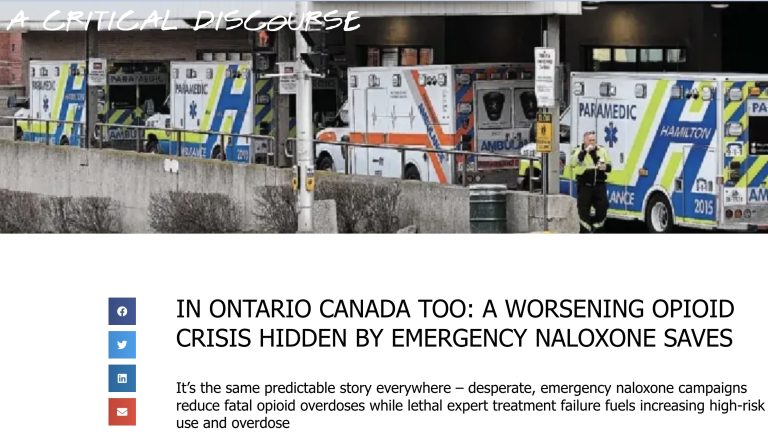
This January 2026 post returns to Ontario, to find predictably, that It’s the same predictable story everywhere – desperate, emergency naloxone campaigns reduce fatal opioid overdoses while lethal expert treatment failure fuels increasing high-risk use and overdose
And in which the consistent, overwhelming, determinative evidence is outlined, establishing that there is no uncertainty, the medical/media collusion mystification necessary precisely because –
That all makes sense,
and serves as yet one more example of a locale, consistently, where the evidence further affirms what is established: that in the U.S., Canada and almost certainly elsewhere, it is desperate, emergency, effective naloxone complaigns that solely account for recent and historical drops in opioid-related deaths, not other factors.
But what about the increasing EMS calls for opioid overdose? How does that fit in? As opioid deaths are declining?
Exactly as predicted based on what is established consistently by research and congruent evidence.
As explained and supported by linked-to evidence and research repeatedly in multiple posts at A Critical Discourse –
Emergency, intensive naloxone campaigns have arisen desperately as harm reduction against a worsening crisis precisely because high-risk opioid use continues to mount.
High-risk opioid use is a direct measure of expert gold standard treatment lethal failure, those “treatments” beneficial only to the extent that they prevent high-risk use.
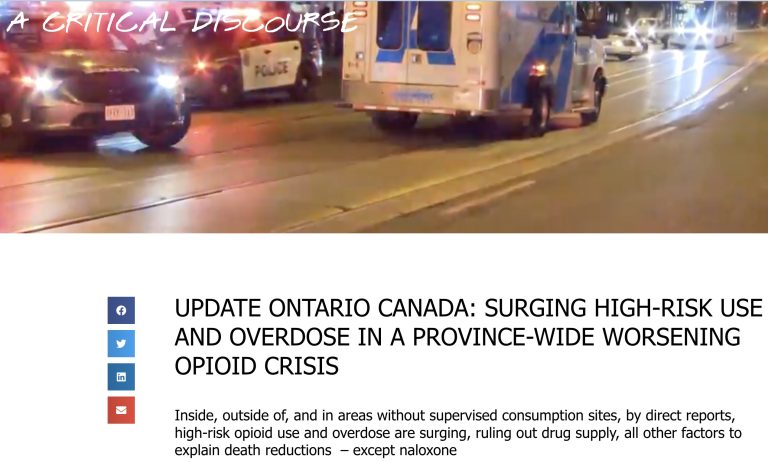
And most recently, from this March 2026 post, an in-depth analysis of trends, causes, and course of opioid-related high-risk use, overdose, and fatal overdose in Ontario, adding additional clarity and certainty, exposing the lethal fabrications required for mystification.
And the source of those “TAKEAWAYS”, above.
The subheader bears repeating:
Inside, outside of, and in areas without supervised consumption sites, by direct reports, high-risk opioid use and overdose are surging, ruling out drug supply, all other factors to explain death reductions – except naloxone
No mystery there.
And the winner is …
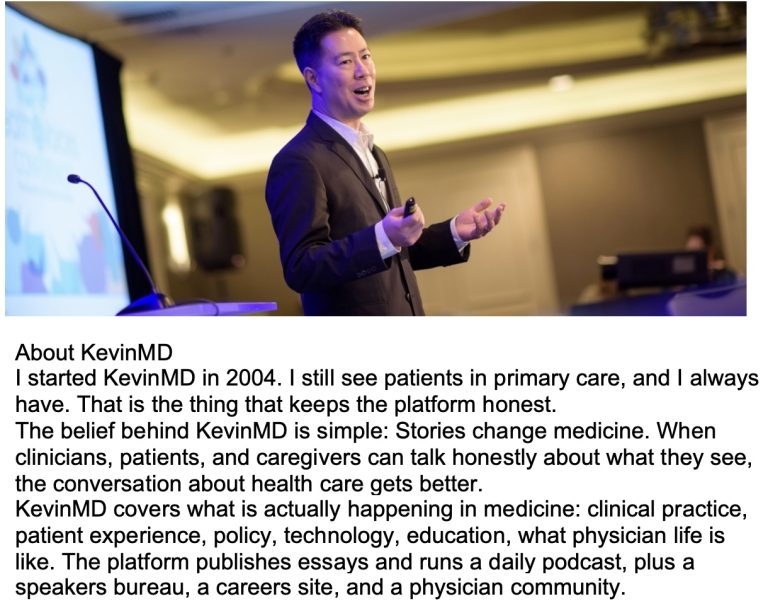
The winner of this OPIOID CRISIS MISINFO ROUNDUP is the freakishly popular and successful, authoritative expert website, MEDPAGETODAY’s KevinMD.com.
In case there could be any doubt about the veracity or trustworthiness of a website as recognized as KevinMD, there’s this –
And this –
There is even less room for doubt about the medical and scientific standing and status of the author featured by Dr. Pho recently at his website with the article I had planned to examine here, in this post.
“over 300 published papers and interviews”!
That says something.
I just noted “the article I had planned to examine here, in this post”, in a post about “OPIOID CRISIS MISINFO”.
And now? Considering the levels of media and professional esteem and credibility awarded the author of the piece and Dr. Pho, who vets the pieces for his website, it is literally inconceivable that we could consider engaging in that level of disrespect, akin to challenging the judgment or competence of someone with the earned respect of a Dr. Anthony Fauci, or a Francis Collins.
So, let’s do the only thing we can and should do, must do – summarize, validate, and amplify the important, life-saving medical and public health insights and truths we are fortunate to be provided by Dr. Lawhern and Dr. Pho.
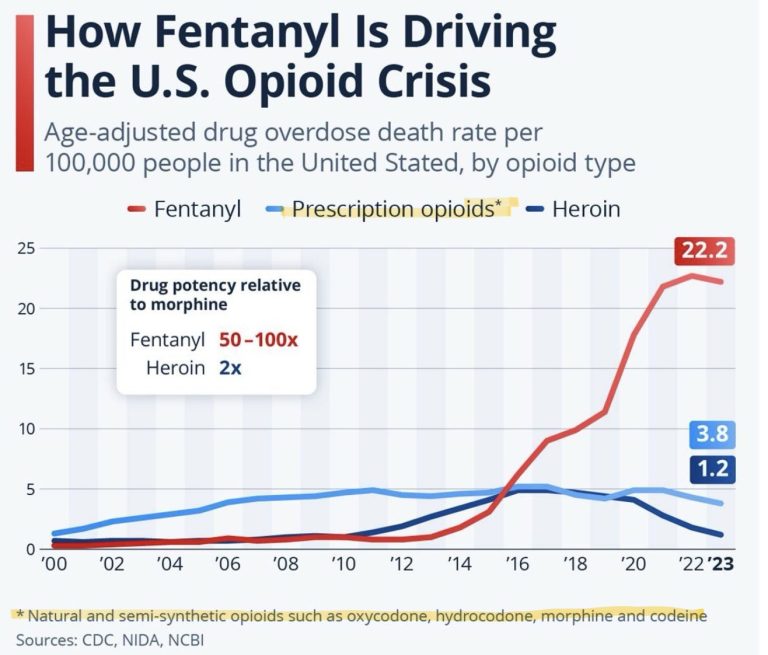
It is often said in popular literature that figures lie and liars figure. However, sometimes in science, the lie is by omission. What we don’t say can be even more important in our conclusions than what we do. Two charts illustrate this principle in a centrally important issue of U.S. clinical practice.
The first chart is compiled by Statista, a well-respected data services company known worldwide. It addresses the relative potency and incidence (the rate of occurrence in postmortem tox screens) of drugs that appear in U.S. accidental drug overdose deaths. Original sources for the data are the U.S. Centers for Disease Control, the National Institute on Drug Abuse, and the National Center for Biotechnology Information, a division of the United States National Library of Medicine, which is a branch of the National Institutes of Health (NIH).
Those are strong words, but justified and legitimate when coming from someone with the author’s competence and status. Don’t you think?
And the importance of the main point being established with this analysis at KevinMD can’t be overstated – that it is NOT the prescribing practices of American medical professionals driving the worsening opioid crisis. It’s clearly not about the “Prescription opioids” that include “Natural and semi-synthetic opioids such as oxycodone, hydrocodone, morphine and codeine”.
Oh … okay … wait.
There may be … an omission here.
Absolutely unintentional, for certain. But …
[rhetorical question alert]
The commonly prescribed drug methadone, steadily increasing in its provision over decades of the worsening crisis… it’s an opioid?
And it is only available by doctor prescription?
And what about buprenorphine (as Subutex, Suboxone, or Sublocade), also dramatically, increasingly supplied over decades of the crisis … also an opioid? Not an opioid? And available over the counter or, like methadone, only by doctor prescription?
Okay, that’s clear. But what’s the big deal?
Just this.
It is established by literally hundreds of congruent, reinforcing analyses here that the lethal failure, misuse, abuse, diversion, and other key roles in economies of illicit opioid use of those addictive, doctor-prescribed opioids have been and are fueling the worsening crisis.
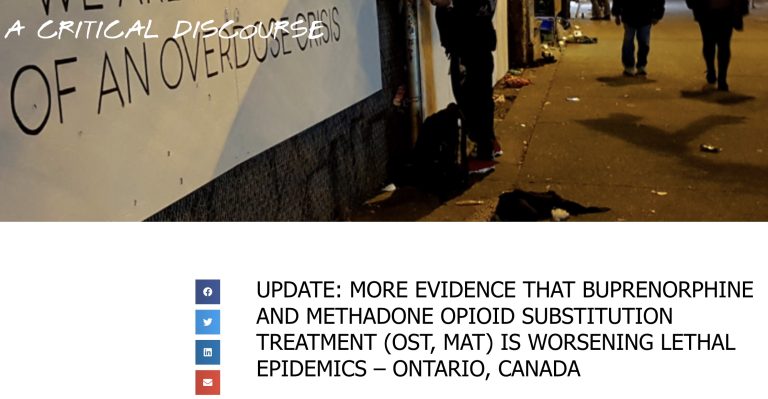
For methadone, that evidence includes this recent post and a February 2019 post featuring the observations of Sam Quinones on the role of methadone in expansion of heroin markets.
From that post –
Methadone clinics
In Dreamland, Sam Quinones’ devastatingly unflinching indictment of American institutions and trusted medical and media authorities complicit in the lies generating the opioid crisis, methadone clinics are described as playing a crucial role in the wildly successful expansion of cheap, potent black tar heroin from Mexico into the U.S. – up the West Coast, into midwestern cities and everywhere in between – because those clinics are hubs for trade and use of illicit and licit drugs of abuse (p 64) –
Methadone clinics gave Xalisco Boys the footholds in the first western U.S. cities as they expanded beyond the San Fernando Valley in the early 1990s. Every new cell learned to find the methadone clinic and give away free samples to the addicts.
One Xalisco Boy in Portland told authorities of a training that his cell put new drivers through. They were taught, he said, to lurk near methadone clinics, spot an addict, and follow him. Then they’d tap him on the shoulder and ask directions to someplace. Then they’d then spit out a few balloons [packaged black tar heroin]. Along with the balloons, they’d give the addict a piece of paper with a phone number on it.
“Call us if we can help you out.”
The value of each Xalisco heroin tiendita was in its list of customers. “This is how they would build and maintain it,” said Steve Mygrant, a Portland-area prosecutor. “It was an ongoing recruiting practice, in the same way a corporate business would identify customers.
And in Indianapolis and Columbus, Ohio (pp 143-144) –
Camping out in front of the town’s methadone clinic, he gave away samples of his dope and soon had a client list of desperate junkies avid for the black tar they’d never seen before.
. . .
They met at the town’s methadone clinic off Bryden Road the next morning. The clinic was a hive of illegal dope trading. Almost anything a user wanted was for sale. He gave Chuckie a few free samples and his beeper number.
That afternoon, Chuckie called.
“That’s some killer stuff you got,” he said. “I gotta whole buncha people want some of that.”
Reporters glimpsing dimly the writing on the wall and missing, blinded to, the graffiti next to it. The signs and reports everywhere, of what should be obvious, signs of why bupe seemed, at least on a superficial and unexamined level, to make sense as a safer alternative to methadone. Methadone, highly regulated and dispensed in clinics, in Appalachia the gathering places for illicit trade and use of opioids and other drugs.
From Beth Macy’s Dopesick (pp 215, 218) –
“I’m walking around the methadone clinic parking lot for two hours with a four-day-old baby,” Patricia said. “And it was loaded with addicts. It was a place where Tess’s circle of addicts would become even bigger than it already was.”
. . .
As early as 1963, progressive researchers conceded that designing the perfect cure for addiction wasn’t scientifically possible, and that maintenance drugs would not “solve the addiction problem overnight,” considering the trenchant complexities of international drug trafficking and the psychosocial pain that for millennia has prompted many humans to crave the relief of drugs.
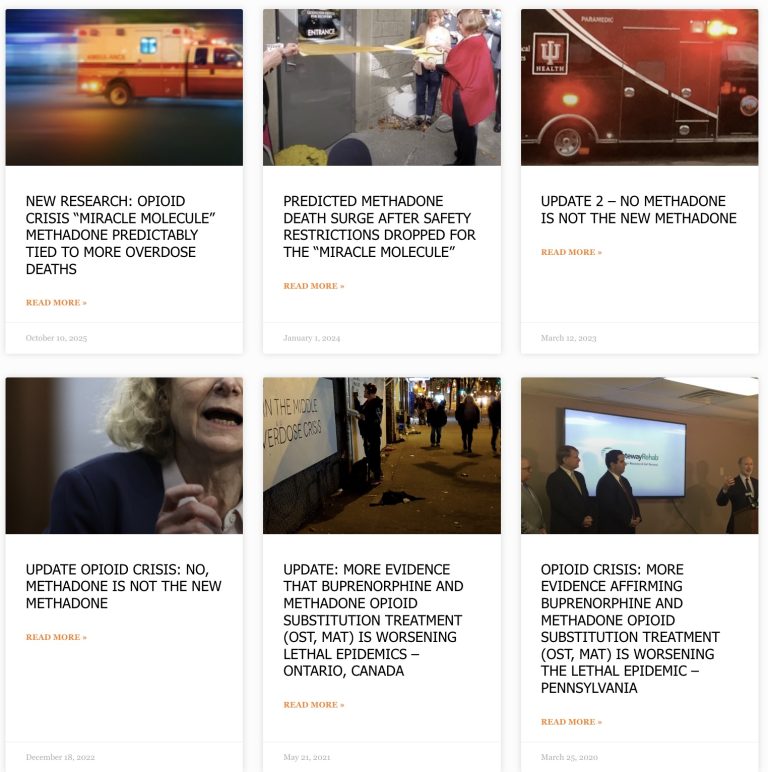
Back to our current post, and to a glimpse of the scores of additional analyses at ACD of the lethal role of methadone in the iatrogenic crisis.

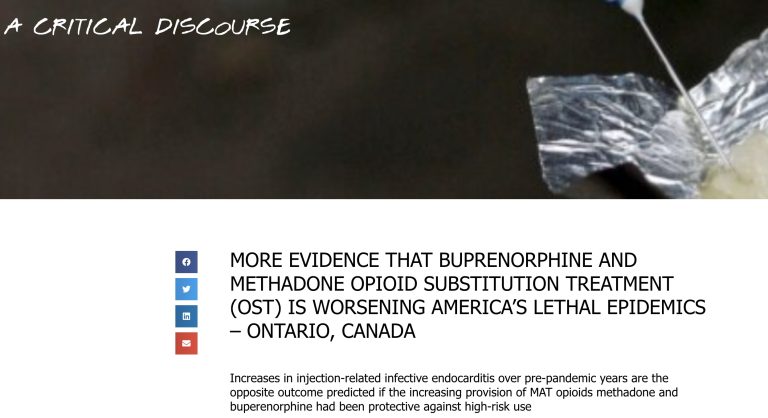
For buprenorphine, that evidence includes this recent post and a July 2024 post establishing the lethal outcomes attributable to expansion of buprenorphine provision from NIH’s revelatory $350 million attempt to preserve the lie of benefit from the gold-standard doctor-prescribed opioid medical cure.
A glimpse of the scores of additional analyses at ACD of the lethal role of buprenorphine in the iatrogenic crisis.

And a reversal …
The winner of this OPIOID CRISIS MISINFO ROUNDUP really is the freakishly popular and successful, authoritative expert website, MEDPAGETODAY’s KevinMD.com.
Can that achievement conceivably be topped?
More to come.