OREGON, NEAR THE BOTTOM NATIONALLY FOR SUBSTANCE USE OUTCOMES, PORTRAYED AS A MODEL FOR EFFECTIVE TREATMENT
The media-celebrated expert medical implementation model was activated in 2015, and Oregon’s substance use outcomes headed for the bottom
by Clark Miller
Published September 25, 2026
Fierce Healthcare is described by AI in a search as “a digital news organization that covers the business and policy side of the American healthcare industry” and as “a legitimate, well-known digital news and information organization that covers the healthcare industry.”
In the early 2010s, as a hospitalist at Oregon Health & Science University (OHSU), Honora Englander, M.D., was noticing more hospitalizations related to substance use disorder (SUD) complications. The system wasn’t equipped to handle them. …
OHSU conducted a needs assessment that surfaced how critical a touchpoint the hospital was for SUD patients. Up to two-thirds of patients with active drug use were interested in cutting back or quitting. Many reported interest in medications for opioid use disorder (MOUD), and they wanted to be able to start them in the hospital. It became clear that pathways to ongoing care after discharge in the community were missing.
In 2015, based on these learnings, Englander formed IMPACT, a multidisciplinary consult team of addiction medicine docs, advanced practice providers, social workers and others. One of the first of its kind in the country, it has grown to three dozen staff across multiple hospitals.
The results have been striking. OHSU has found patients who met with the IMPACT team while they were in the hospital were twice as likely to participate in treatment for SUD after going home. Research has also found IMPACT leads to decreased substance use after a hospital stay; lower costs associated with fewer days spent in the hospital; increased patient trust; and better hospital staff knowledge of addiction and treatment.
[emphasis added]
Let’s consider those “striking” results.
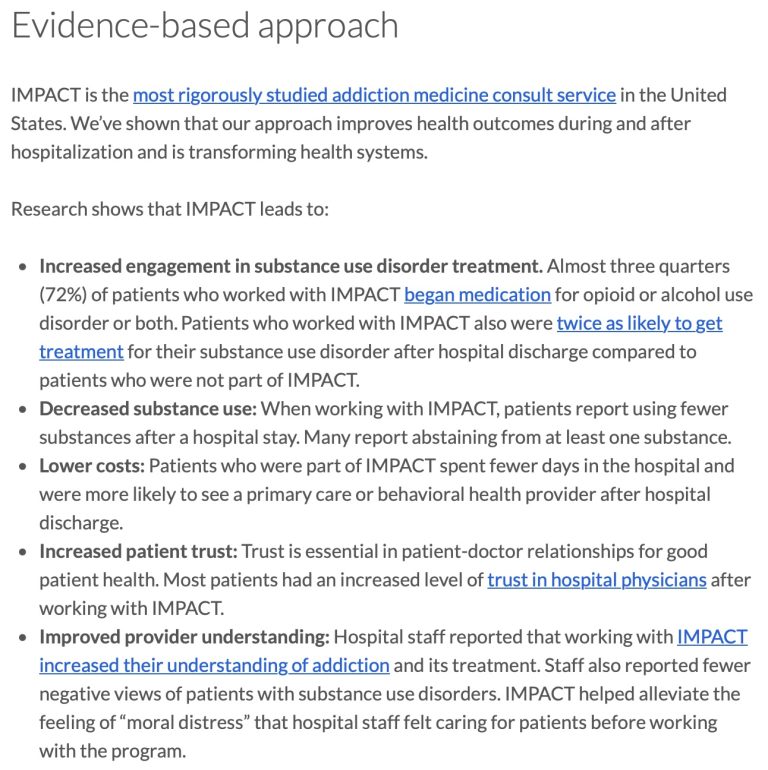
IMPACT provides its own assessment of them here.
Let’s consider those achievements.
Increased engagement in substance use disorder treatment. Almost three quarters (72%) of patients who worked with IMPACT began medication for opioid or alcohol use disorder or both. Patients who worked with IMPACT also were twice as likely to get treatment for their substance use disorder after hospital discharge compared to patients who were not part of IMPACT
If this was engagement in individual psychotherapy, the only primary effective treatment for problem, compulsive substance use, we might predict benefit, if there was sustained engagement, which we don’t know, from the evidence IMPACT uses to support this claim.
But it’s not, not psychotherapy, instead “rehab”, or “addiction treatment” or medications for substance use, a condition that is not remotely medical and is not treated by medications. All of those approaches are established as predicting harm.
Decreased substance use: When working with IMPACT, patients report using fewer substances after a hospital stay. Many report abstaining from at least one substance
“patients report”
Right.
Great! To the extent that their reports of IMPACT-supported changes are reliable and the gains real and significant, we will see those results reflected in Oregon’s substance use epidemiological data. We’ll get to that.
Increased patient trust: Trust is essential in patient-doctor relationships for good patient health. Most patients had an increased level of trust in hospital physicians after working with IMPACT.
That trust is, under some clinical and health care circumstances, positive and beneficial. In this case, to the extent that patients are being encouraged to start on medical “cures” that predict harm, are established as fueling an epidemic, or to engage in traditional “addiction treatment“, also predicting harm, that trust is lethal.
Improved provider understanding: Hospital staff reported that working with IMPACT increased their understanding of addiction and its treatment.
This result tells us that the harms inflicted by IMPACT have not been restricted to patients, but impacted suggestible professionals as well. The medical model understanding of compulsive substance use as a disease of the brain, absurd on its face, robs vulnerable, at-risk patients of the key, necessary therapeutic and protective factors they need to succeed: empowerment, self-efficacy, internal locus of control, and insight pointing the way to change.
And it’s a lie.
But let’s be fair. Let’s provide IMPACT a fair evaluation by considering real, statewide substance use metrics that might reflect benefits of the increasingly widespread consultations, trainings, and implementation.
I remember, as early as 2017 or 2018, encountering IMPACT’s conceptual model and outreach as a mental health clinician in a rural Oregon county, including the ECHO network. IMPACT had metastasized significantly from the Portland metro area, home of OHSU, with increasing potential for positive impact if there were benefits from the approaches.
How was IMPACT’s expert clinical support and provision of services beginning in 2015 impacting Oregon’s substance use problems?
From a piece in the Oregon Capitol Chronicle, let’s consider, remembering that IMPACT was initiated in 2015 –
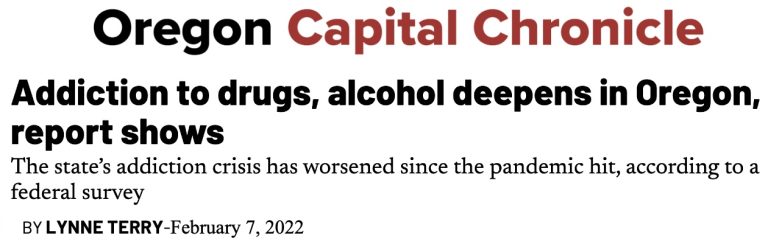
Oregon has the worst drug addiction rate in the country, federal data show.
The latest National Survey on Drug Use and Health said that 9% of teens and adults were addicted to drugs in 2020. About 12% of Oregonians aged 12 and older said they had an alcohol problem. That compares with nearly 7% in 2019.
Combined, they gave Oregon the second worst overall addiction rate nationwide, with nearly one in five teens and adults reporting a problem with drugs or alcohol.
Montana came first, but just by a fraction.
The previous year, Oregon ranked fifth, with 9% of people aged 12 and older reporting an addiction problem.
[emphasis added]
That “previous year, 2019?
That was pre-pandemic, and 4 years into IMPACT implementation.
But the problem has not gone away. In 2019, Oregon had the highest rate of misuse per capita of prescription opioids in the country – and it still does, according to the federal survey.
Oregon also has a methamphetamine problem that is getting worse. In 2019, about 1% of teens and adults used meth, the sixth highest rate in the country. That jumped to nearly 2% in 2020, the worst ranking nationwide.
That too was pre-pandemic, and 4 years into IMPACT implementation.
Maybe IMPACT just needed more time for implementation, for the benefits to become real and measurable.
Let’s keep looking.
During the COVID Pandemic years and during implementation of the voter-passed decriminalization Measure 110, which focused on displacing criminal justice entanglement for high-risk users with intensified support for treatment involvement, things got worse. At 6 years into implementation of IMPACT – its OHSU core and source for statewide metastasis in Portland, Oregon’s epicenter for high-risk use and drug fatalities – there were no signs of moderation or benefit. From Willamette Week, January 2022 –
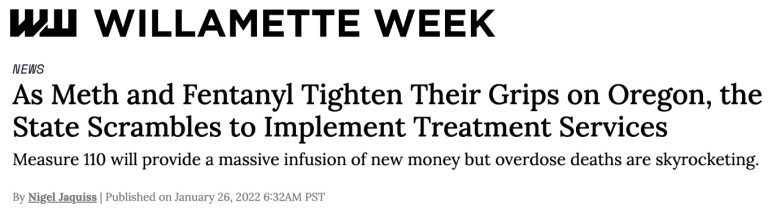
Please note that for the bar graph below, the numbers for 2021 represent deaths for the first half (FH) of that year only.
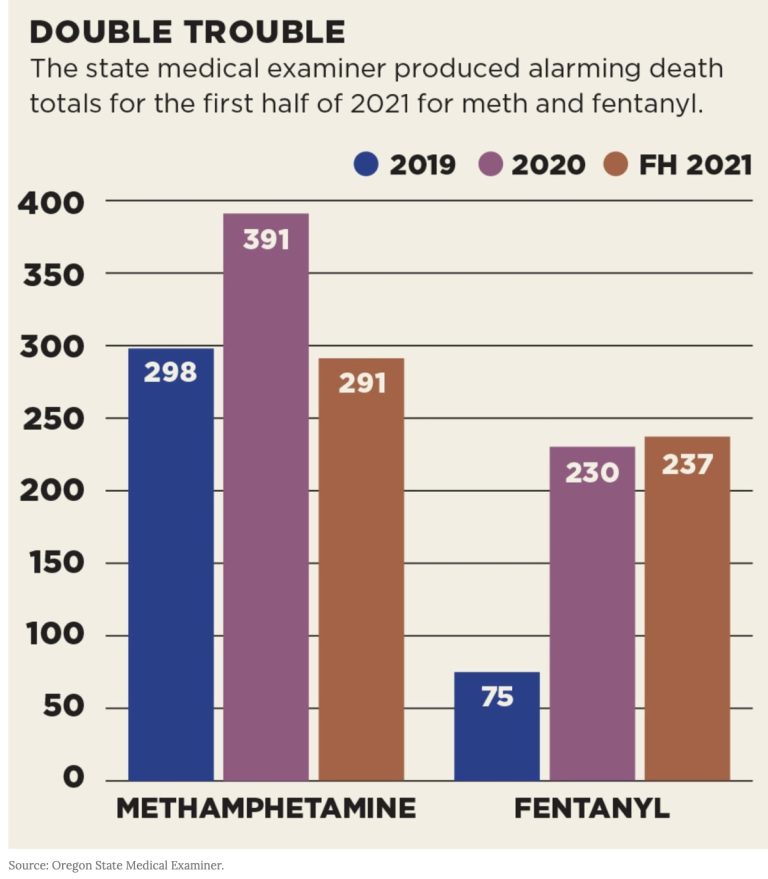
Instead, drug overdose deaths in Portland and Oregon continued to surge, through 2022 and 2023, beyond attributable COVID effects and 7 and 8 years into the expansion and implementation of IMPACT.
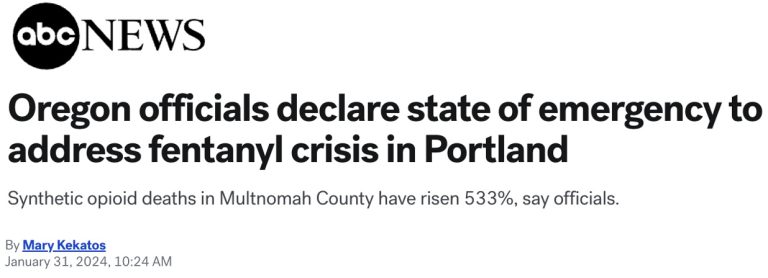
By January of 2024, Oregon officials had declared a 90-day state of emergency for Portland, again, Portland the site of IMPACT’s genesis and dissemination to hospitals and clinics beginning in 2015.
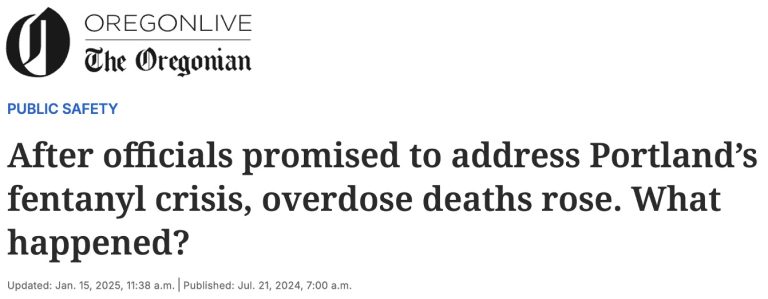
Here’s a headline, below, from a follow-up piece in the Oregonian about 6 months later that answers its own question.
“What happened” in Portland is what happened in Baltimore, predictably, when Portland city “officials promised to address Portland’s fentanyl crisis” and did, by doubling and tripling down on expert, gold-standard “treatments” established as lethally failed. That’s covered here, and here, and in multiple additional posts describing Oregon’s efforts.
From October 2024, this FOX News report highlighted drug deaths in Oregon increasing into 2024 from 2023 and included this observation and explanation from OHSU addiction expert Dr. Todd Korthius, head of OHSU’s Addiction Medicine Section, that “We should be cautious when interpreting this data, which uses absolute number of deaths”, that “what would be more meaningful is looking at the per capita rate of overdose deaths, Dr. Korthius adding that “When you look at that, we’re not that far off from other states”.
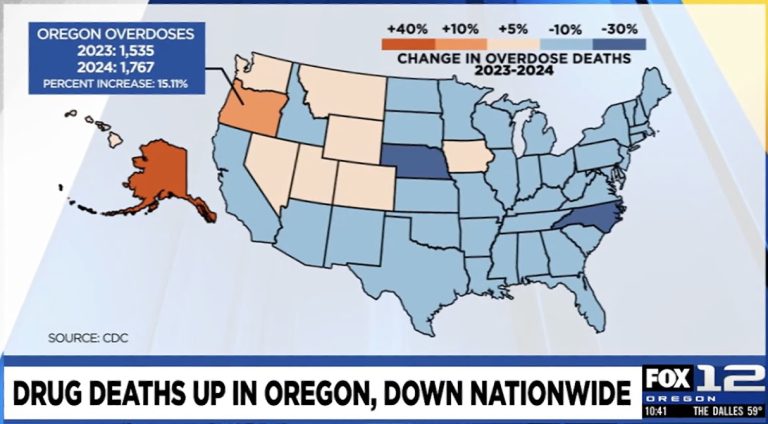
From another Oregon news report for that period, from the Oregon Capitol Chronicle, published also here.
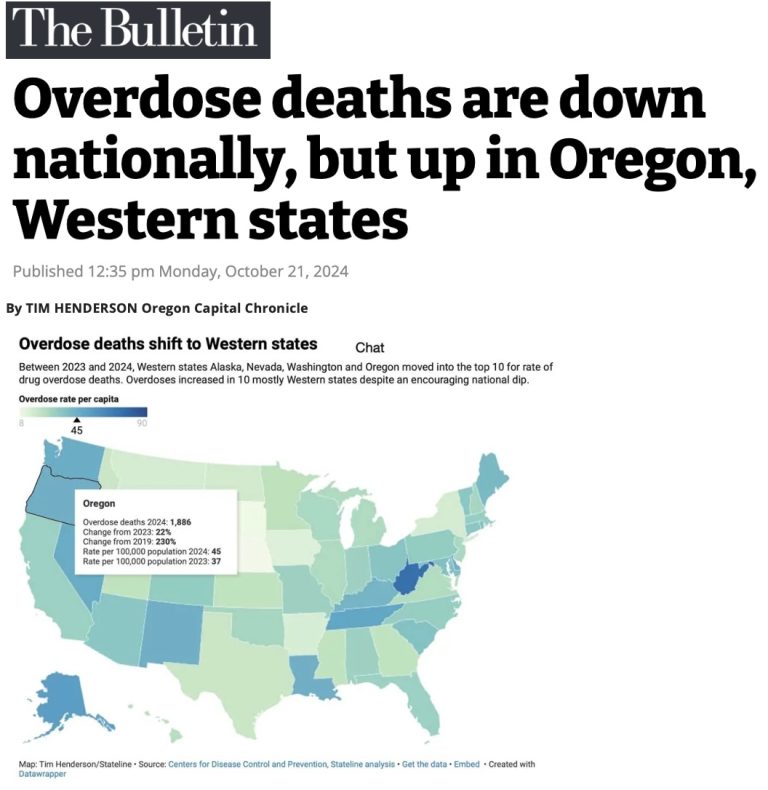
Readers may note that drug-related death rates are reported per capita as displayed in that graphic.
Per capita drug-related deaths are included in this report on CDC data for fatal opioid overdoses, by state, in 2024.
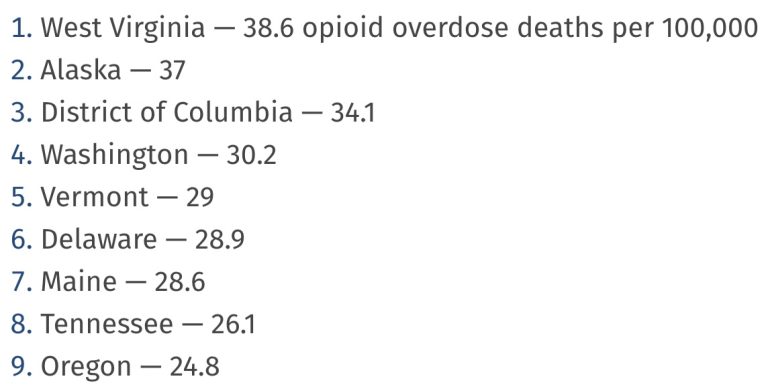
Oregon’s per capita incidence for opioid-related deaths was the ninth-worst of all states and nearly twice as high as that for the neighboring West Coast state of California, at 13.5.
Let’s fast-forward to current trends and evidence
The legislative re-criminalization of small amounts of drugs in mid-2024 preserved an emphasis on recruiting high-risk users into treatment. From this report –
In an effort to preserve the treatment-first approach ushered in by Measure 110, lawmakers set aside $20 million to give counties the option to set up programs to deflect people towards treatment programs instead of solely facing criminal penalties.
According to data from the Oregon Criminal Justice Commission, from September 1, 2024, when the new law went into effect, to August 20, 2025, law enforcement made 9,893 arrests, though the majority of them included other crimes, such as trespassing, drug delivery or theft. …
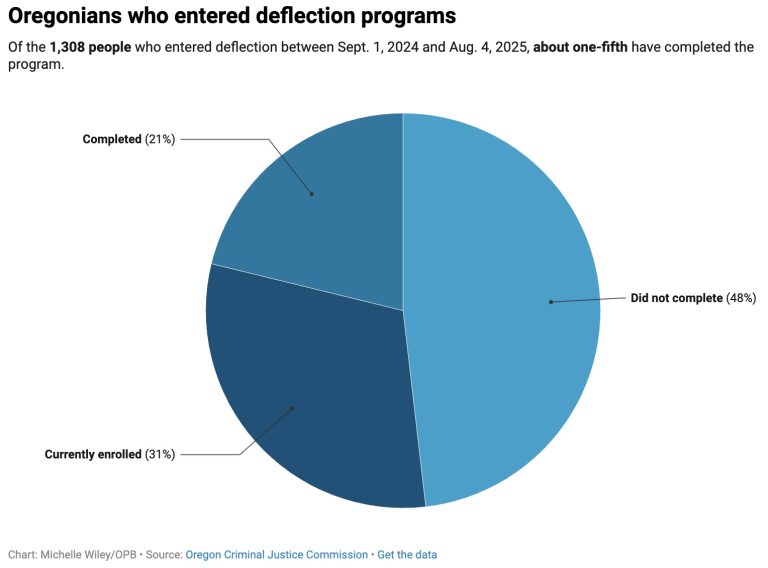
Between September 1, 2024, and August 4, 2025, 1,727 people qualified for deflection. Of those, 1,308 entered a program. Roughly 48% didn’t complete deflection. The remainder either completed the program or were currently enrolled, state data shows.
That is, more than twice as many drug-involved and arrested Oregonians starting Oregon’s treatment system did not complete, and there was no evidence reported for outcomes for those who did complete.
Opioid overdose deaths have finally been dropping in Oregon more recently, in 2025 and possibly beginning in 2024.
Still, state officials say it’s too early to make sweeping statements or draw definitive conclusions about whether the state’s county-by-county approach, or its nascent programs, are helping connect drug users with treatment in ways that have met Oregonians’ expectations.
That circumspect approach is a very wise choice for state officials, given that any attribution for reduced opioid deaths to factors other than Oregon’s late-starting, now energized naloxone campaigns would require that Oregon is truly an outlier, unique and distinct from all other states analyzed, in which, consistently, naloxone campaigns have accounted entirely for those drops.
What about in Oregon?
From a December 2024 Oregon Public Broadcasting (OPB) report noting a possible “slight decline” in opioid overdose deaths by the end of 2024, citing Liz McCarthy, overdose epidemiologist with the Oregon Health Authority (OHA) –
McCarthy said the provisional data for 2024 does show a “slight decrease” in overdose deaths compared to last year.
“There’s probably many, many things that are impacting this downward trend, including naloxone saturation across the state, making sure everyone has access to this life saving drug,” she said.
While Oregon’s opioid and other drug deaths peaked in 2024, they also began declining that year, per “federal health projections” cited in this report, originally published in The Lund Report.
Opioid deaths across Oregon are in decline for the second year in a row, according to federal health projections, dropping nearly 20% in the 12 months ending in August 2025 compared to the same time a year ago, and more than 30% down from the state’s peak in May 2024.
Health experts say multiple factors contributed to the decline, from the increased availability of Narcan to crackdowns on overseas manufacturers. …
Korthius [OHSU addiction expert Dr. Todd Korthius] credited multiple factors for bringing down the rates of overdoses in Oregon, including expanded access to medication-assisted treatments such as buprenorphine and methadone. Methadone has long been a treatment for heroin addiction, but has proven popular as an option for people looking for withdrawal relief from fentanyl.
[emphasis added]
Interestingly, OHSU research has contributed to the consistent invalidation of presumed benefit for compulsive opioid use and the worsening crisis attributable to medical gold standard opioid substitution (by dispensing of buprenorphine and methadone), described in this post –
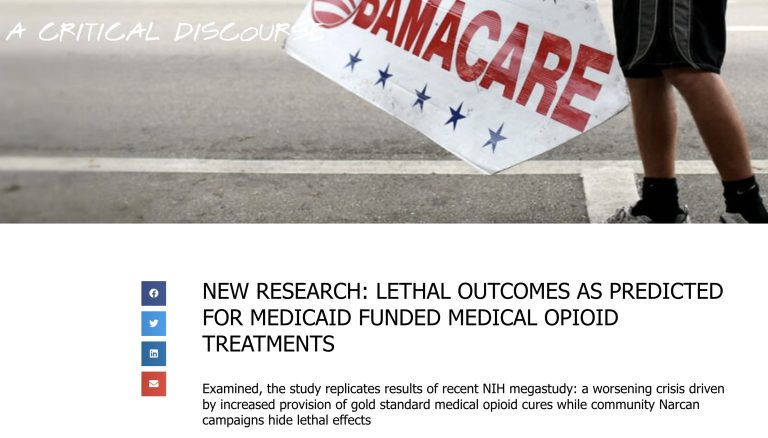
Those results, invalidating of the forcus of IMPACT’s treatment expansion efforts, are more recently reinforced by results replicating the predicted lethal failure.
And are, predictably, entirely congruent with the harm-affirming outcomes of NIH’s $344 million study of medication for opioid use disorder (MOUD).
Back to Oregon and the beginning of a decline in opioid-related (and total drug) overdose deaths beginning in late 2024.
A reasonable and potentially valuable comparison is to our neighboring West Coast state, California, as noted above, where declines in opioid (and other drug) related overdose deaths began a year earlier than in Oregon.
From a previous post –
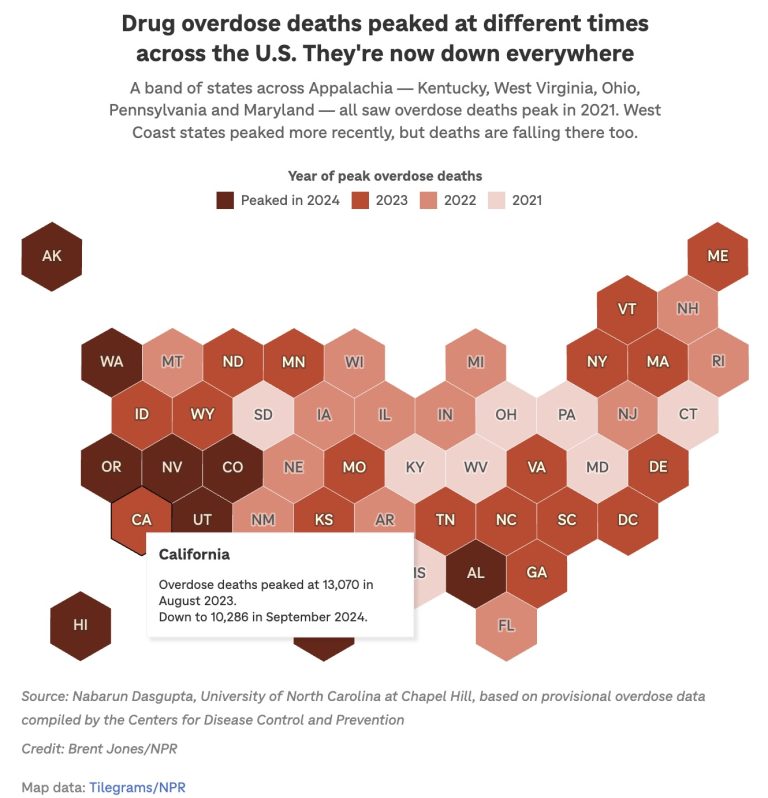
We are compelled and obligated to provide explanations, grounded in evidence, for the differences in trajectories of drug overdose deaths in order to identify factors causally linked, or not.
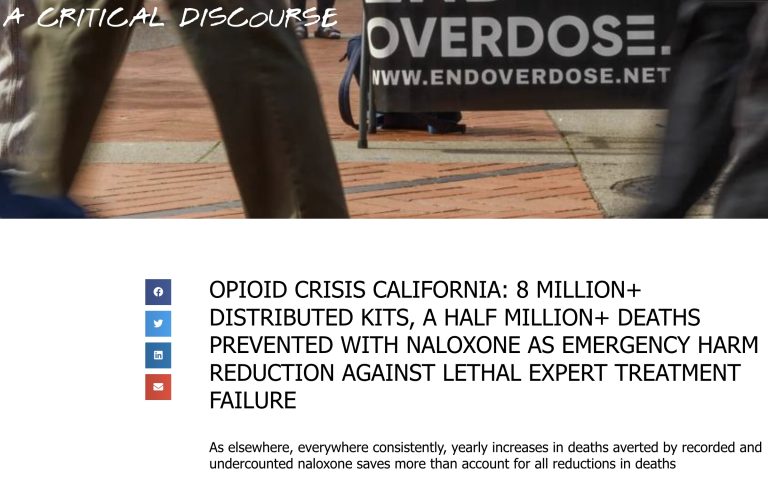
As explained in detail in this post, in California it was all about the intensive, community-based, hyper-funded, dramatically successful naloxone campaigns correlated in timeline to the drops in deaths. And, as described, the magnitude of year-by-year increases in potentially fatal overdoses reversed (= deaths reduced) more than accounting for magnitudes of OD death reductions.
What about in Oregon around that time?
Oregon was struggling, was “late to the game”. Late like numerous other states in launching and developing adequate, effective (targeted and community-based) naloxone campaigns, identifying those states as “exceptions proving the rule” – the rule that consistently, in disparate states, cities, and other locales across the U.S., the quality and timing of life-saving naloxone campaigns entirely account for nationwide and finer-grained differences and patterns in drops in overdose deaths.
It’s not coincidental that not until late 2024 did opioid related deaths in Oregon begin to fall. Legal, institutional, and funding barriers kept naloxone provision efforts suboptimal (described here, and here, and here).
Reported here, in July of 2023, state and community-based voices persisted in concerns about the anemic response that included rationalizations from Oregon Health Authority (OHA) as to why, unlike in California, Oregon was not prepared to help get naloxone widely distributed to laypersons and others in areas of high-risk use where it is needed, where every second counts.
There’s little doubt about the need for expanded access to medication like Narcan, which state leaders refer to as “opioid antagonists.” …
By passing HB 2395, Oregon lawmakers declared the fentanyl crisis a statewide emergency. The bill includes a variety of straightforward changes, if signed into law by Gov. Kotek. …
The bill allows businesses and other publicly-accessible spaces to stock naloxone and removes the risk of liability for anyone who administers Narcan when they suspect an overdose.
This includes teachers and school administrators — they no longer need parental permission to administer what could be a life-saving drug. …
“I think this removes a lot of the fear that people will feel [when asking] is this a moment when I jump in,” Wirshup said. “I think it will allow us to provide more Narcan to folks who are doing work on the ground in communities with people who need it.” …
But it’s the primary intent of HB 2395 — expanding access to Narcan and enticing more Oregonians to have it on hand — that carries significant questions.
The final version of the bill dropped language that would have encouraged the Oregon Prescription Drug Purchasing Program (OPDP) to buy Narcan in bulk, opening up pathways to discounted widespread distribution.
Oregon Health Authority spokesperson Afiq Hisham said OPDP would like to support opioid antagonist access efforts, including support for private businesses in acquiring products at a reduced price as part of the “comprehensive statewide approach.”
However, he said the currently unfunded OPDP model would be unable to do this without organizational changes and funding. …
Wirshup [Ellen Wirshup, organizer of Project RED Initiative] said Project RED, with the help of CareOregon, can currently purchase a kit of Narcan spray for about $43. She added that if Oregon wants to get Narcan in more places, any efforts to lower the cost would go a long way.
“The ability to have more Narcan on hand at a low cost would allow us to do more and more,” she said.
Still, there remains questions about how, or if, Oregon might accomplish a price reduction and widespread distribution of opioid antagonists.
[emphasis added]
Oregon’s late efforts toward effective naloxone saturation explain drops in opioid OD deaths finally starting in the second half of 2024.
Over the 9-year (2015 to 2024) celebrated IMPACT implementation of gold-standard medical treatments, high-risk use and deaths increased.
That was predictable in the context of those gold-standard medical treatments, as well as community “addiction treatment“, having been established as lethal failures.
In fact, for Oregon and elsewhere, all fabricated explanations for recent-year drops in opioid deaths are ruled out,
are invalidated independently by at least three lines of evidence.
I
Consistently in diverse locales, where data and estimates are available, analyses demonstrate that magnitudes of year-by-year increases in effective provision of naloxone and reports and estimates of reversals more than account for magnitudes of the temporally corresponding reductions in opioid overdose deaths. Those preventions of deaths by naloxone – directly observed and tracked – leave no reduced deaths to account for by other speculative factors.
II
The highly variable and disparate – geographically, by scale, and temporally – differences among states, counties, cities, and other locales are consistently accounted for by variation in naloxone campaign responses and courses, and belie speculations of broad regional or national patterns involving, for example, drug supply disruptions, reduced high-risk use through attrition by death, or other broad factors, including generational changes that are directly ruled out by the evidence.
III
From a post earlier this year –
Let’s see if they’re right.
And that requires an initial digression.
Imagine the very common case of a high-risk opioid user, having administered an illicit substance that was believed to provide the needed relief from impending “dopesick” withdrawal symptoms and from the physical, emotional, and psychological pain and fears that drive all compulsive substance use.
This time, as is common and unintentional, the dose; potency, or makeup of what was taken is too much, more than desired, and the user is headed toward a likely fatal overdose, with the classic signs.
There is one type of intervention now that can prevent that death – one only – the urgent administration of naloxone or similar opioid antagonist, or oxygen in a supervised consumption site.
But wait! Let’s see, what else, though, after the potentially fatal dose has been administered, could reverse that impending fatal overdose? Medication assisted treatment with substitute opioids (MAT, MOUD, etc.) ? Fentanyl test strips? Addiction treatment? Fentanyl supply disruptions?
Yes, I know.
And yet, it is entirely necessary to be facetious, obnoxiously so, because the point has been lost, the most obvious point ever.
For each and every one of those “treatments”, interventions other than naloxone, harm reduction strategies, or supply disruptions, the only possible way to have benefit, to prevent fatal ODs, is to prevent high-risk use and overdose in the first place. And? If high-risk use and overdose are not demonstrably being prevented by them, then no reduced overdose deaths can be attributed to them.
Take just a couple of minutes to think about that. That is all that is required.
Back to our current post and to the third of three independent nullifications of any and all fabricated explanations for recent-year drops in opioid-related deaths.
This is not complicated. Without evidence for reductions in high-risk opioid use (or other drug use that may cause fatal overdose due to opioids) correlated with a presumed or speculated “treatment”, harm reduction, or other factor, there is no evidence to support any factor other than naloxone campaigns as providing benefit in reductions in opioid deaths.
There is no such evidence, instead consistent evidence pointing to persistence or worsening of high-risk use.
Back to that post from earlier this year –
Fortunately, there is real, valid evidence bearing directly on this very question.
Let’s consider it.
Changes and differences in incidence of fatal opioid overdoses are always confounded by increasingly prevalent, intensive, and successful naloxone campaigns and always have been. Idiocy notwithstanding, drops in opioid overdose deaths can never be attributed to factors other than reversed potentially fatal overdoses (i.e. to naloxone campaigns) unless naloxone use is ruled out and overdoses are decreasing correlated with the factor.
That’s a challenging goal, in the context that recent, nearly nationwide drops in fatal ODs are established as entirely attributable to naloxone campaigns and not other factors as in, for example, California.
High-risk opioid use, as indicated by overdose and reversal, is a valid measure of the severity and direction of the crisis, but increasingly and grossly qualified over recent years as effective, intensive naloxone distribution camplaigns have led to surges in reversals by peers and laypersons, reversals that don’t get reported in retrievable ways, that is, result in undercounts of overdoses = undercounts of high-risk use = underestimate of failure of gold standard treatments, supply changes, and other factors.
We can rule out
the presumed or fabricated benefit in reducing opioid deaths from enforcement or any other supply disruptions, from gold standard “treatment”, from any factors other than emergency agonist reversals of potentially lethal overdoses, because opioid high-risk use and overdose are continuing to rise or are not moderating. Everywhere.
That’s established by consistent reports across diverse locales in dozens of posts here and here, and is established by the immense and growing body of reports of precipitously surging numbers of potentially fatal overdoses prevented by emergency naloxone saves. Without surging high-risk use and overdoses, those campaigns would never have been necessary. They are harm reduction for the lethal failure of expert, gold-standard treatments.
[back again to our current post]
That’s worth repeating.
We know that all expert and traditional “treatment”, approaches, and explanations – apart from naloxone campaigns – are ruled out as having had benefit or contributed to opioid death reductions because they can only have such beneficial effects by reducing high-risk drug use, and
because opioid high-risk use and overdose are continuing to rise or are not moderating
Everywhere. That is established.
Over decades of increasing provision of expert, gold-standard treatments.
From this source, we have nationwide data for the most reliably valid measure of that high-risk use, nonfatal drug overdoses (= high-risk use = gold standard treatment failure), below for the past year ending September 6, 2026, ranking and grouping states by per capita nonfatal drug overdose.
And Oregon with its longstanding IMPACT program predictably among states with the highest incidence.
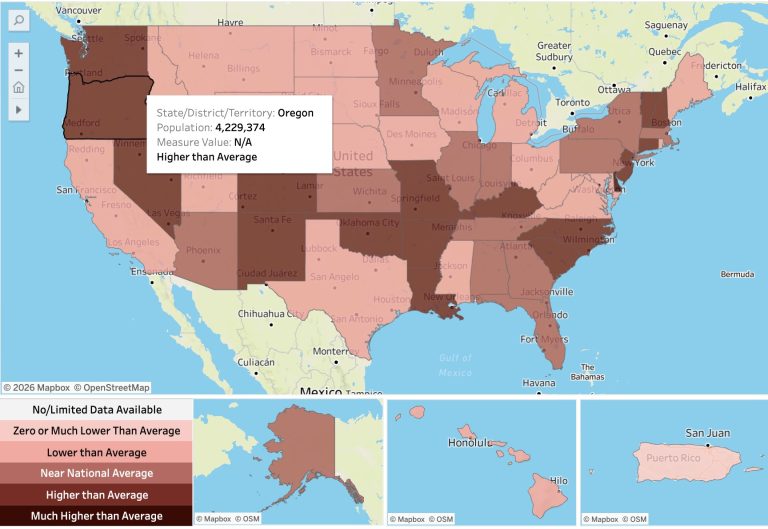
On any competent consideration of the evidence, we are compelled to rule out Oregon’s celebrated IMPACT medical program and rule out expert gold-standard approaches to problem opioid use generally as providing benefit, instead predicting harm.
We are obligated as well to recognize and expose the media/expert consensus of multiple, broad “explanations” for recent-year drops in opioid- and other drug-related deaths as not having the status of explanations at all, a cogent explanation something requiring grounding in the relevant evidence and in its formulation a capacity for critical thought that would be evident, at the least, by an absence of glaring incongruence with available epidemiological, behavioral, sociological, research and public health outcome patterns and data.
We are compelled instead, as advised by the philosopher Wittgenstein, to accept that “meaning is use” – in this case the meaning of those consensus, expert “explanations” embodied in the pressing, desperate use of flimsy fabrications and fanciful stories that don’t need to make sense or be grounded in facts, because that is not their purpose, not their use, which instead is to attempt to hide the lethality of expert approaches behind a constructed media sheen of superficially reassuring expert consensus to escape detection and culpability tied to decades of worsening public health crises.
None of this should have to be belabored, it is all evident, but the learning curve imperceptibly shallow, lethally slow.