NO ESCAPE: THE EVIDENCE ESTABLISHES A WORSENING U.S. OPIOID CRISIS
With no escape from facing that lethally failed expert treatment approaches are driving it
by Clark Miller
Published October 16, 2026
Let’s keep it simple, because it is.
Among the important, relevant bodies of evidence and inescapable conclusions that must inform any credible accounting of the course of America’s opioid crisis and a possible way out:
1. Opioid-related deaths have been dropping over past years.
2. Increasingly, intensifying campaigns to provide training for and to distribute naloxone overdose-reversing units, targeting community settings for layperson use, have increased dramatically and widely.
3. The prevention of an opioid fatal overdose once a potentially fatal dose has been used is increasingly accomplished by naloxone (or similar antagonist, or oxygen) and increasingly by laypersons, decreasingly by emergency responders.
4. Naloxone is the only intervention able to prevent impending deaths in this way.
5. All other interventions or uncontrolled changes presumed to be beneficial – e.g., in drug supply, behaviors of users, provided treatments, harm reduction, prevention, aging out or attrition of users by death – are, all of them, unable to reverse a potentially fatal overdose that is occurring. They can only lead to reduced opioid-related deaths by reducing the incidence of high-risk opioid use, thus preventing potentially fatal overdoses.
6. The most valid (not the only) measure of high-risk opioid use is (nonfatal) overdose, and that measure is persistently, increasingly subject to known, established underestimation due to increasing unreported reversals of potentially fatal overdoses as antagonist reversals (“saves”) shift away from those provided by professional medical or EMT services, which are recorded (and available in databases), shifting to community-based layperson (peer, family, and other) reversals often with compelling disincentives for the overdoser to have the overdose reported.
7. The degree (magnitude) to which nonfatal overdoses are underestimated is confidently predicted to be positively correlated with the magnitude of expansion and development over recent years of naloxone campaigns, more specifically to not only numbers of units dispensed but more certainly to the degree to which geographical areas of high-risk use are identified, targeted, and saturated, a current best practices strategy for effectiveness of opioid death prevention.
Points 1 through 5 are directly and easily verified or already apparent to anyone more than superficially following emerging evidence over decades of the crisis, or in any case are points evident on their face with any rudimentary understanding of the subject areas.
Yet point 5 is ignored, necessarily so, in expert/media consensus messages to a trusting, vulnerable, and gullible public, as if drug supply disruptions or medical substitute opioid “treatment”, for example, could act to reduce opioid overdose deaths other than through the mechanism of reducing opioid high-risk use.
No, really. Seriously. Read the reports and explanations. Those accounts invariably start with the agreed-upon significant drops in opioid overdose deaths, then shift directly to providing “explanations” that aren’t explanations, that don’t hold up to even superficial examination, and never get around to addressing the necessary and lacking evidence for correlation with reduced high-risk use = nonfatal overdoses – without which they are invalidated.
It is as if … as if …
Let’s be generous, for now, and stick to our consideration of the relevant evidence and facts.
Associated points 6 and 7 are solidly established by longstanding, large bodies of evidence comprising direct and other reports, consistently, from diverse locales, and are nevertheless much less recognized as incontrovertible than points 1 – 5, due to neglect, neglect due to their being very inconvenient truths.
That body of evidence is persistently expanded and reinforced with each local report in which a locale, county, or state dramatically reduces opioid OD deaths attributable to intensive, targeted naloxone campaigns, for example, very recently here, also here, and here, and in all of the locales analyzed here.
Start here and here, also here, to understand how unreported naloxone saves have increasingly been hiding the true scope of and nonfatal overdoses, thereby of high-risk use.
Here’s a very recent report in which community direct service providers – directly involved in and aware of changes and trends “on the ground” and in real time – report what is apparent from reports from widespread, diverse locales, that layperson naloxone distribution and use are surging, displacing the necessity of EMS response, and thereby ensuring that estimates of nonfatal overdose based on medical or EMS databases are underestimated with increasing magnitude.
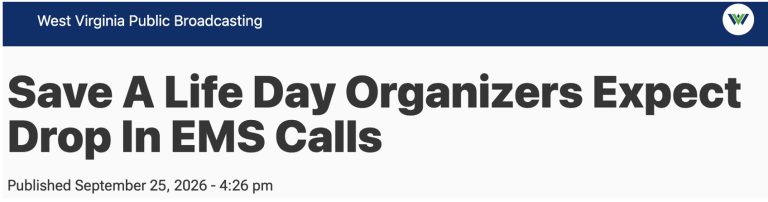
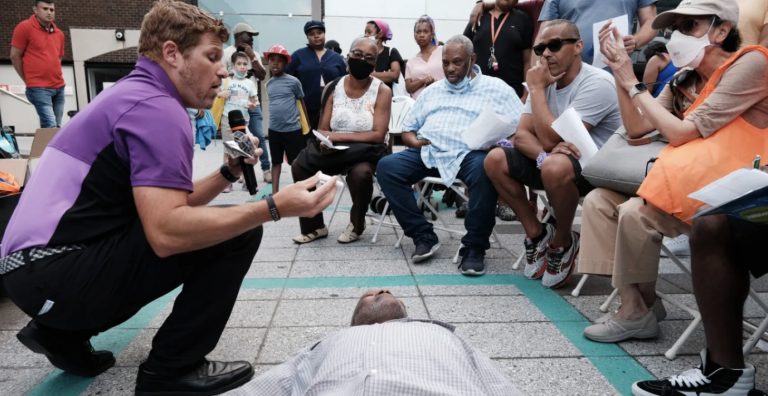
And there’s this recent radically anomalous appearance in major media of simple truth-telling, that –
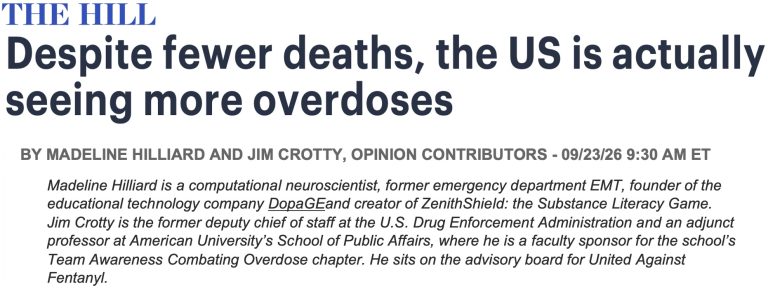
But truth-telling can only go so far.
As the authors put it graciously and, as we know and will see, ultimately with lethal restraint and evasion of the meaning of the role of naloxone campaigns –
We know rescue-side strategies are working. Naloxone is more accessible than ever, more bystanders are learning to use it and more people are surviving their moment of crisis. We should celebrate these hard-fought gains, while recognizing there is still much work to be done.
[emphasis added]
That’s true on its face and as far as it goes, the failure to follow its meaning both lethal and timid.
Consider:
As overdose deaths have declined, nonfatal overdoses — when someone survives the emergency of too much substance shutting their body down — have actually increased, reaching record highs as of this summer. In the one-year period ending in May, the U.S. recorded more than 195 nonfatal drug overdoses per 100,000 Americans, compared to 173 in 2022 when overdose deaths were at their peak. That is nearly 635,000 nonfatal overdoses in a single year.
[emphasis added]
As important, anomalous, and admirable as that acknowledgment is, its incompleteness and inaccuracy contribute to the clear, persistent underestimation of nonfatal opioid-related overdose = underestimation of high-risk opioid use = lethal failure of expert, gold standard treatments and approaches.
How do we know that?
And those are just the ones we know about because they have been documented by paramedics. About two in five nonfatal overdoses are never reported, indicating the true total likely exceeds 1 million drug overdoses in the U.S. in the past year.
[emphasis added]
Here’s something we do know about – that the research linked to for that “two in five” estimate of uncounted nonfatal opioid overdoses (let’s use “NFOO”) is flawed and distorted in the direction of underestimation of unrecorded NFOO. It’s a large difference, resulting, if accurate, in true NFOO being greater than the number based on reported NFOO by a factor of 1.66. So, for example, if reported NFOO for a locale and time period is 100, best estimate for total NFOO in that case is 166.

How are we confident that the “two in five” ratio for estimation of true (total) nonfatal opioid overdoses (= of high-risk use = of gold standard treatment failure) reported in The Hill article is flawed?
A main feature of the JAMA investigation constituting selection bias is that all substance users were recruited for survey by telephone by use of information identifying them as being enrolled in services in “harm-reduction, treatment, and social services organizations” in several states.
We can be confident that the recruitment method selected out (excluded) high-risk opioid users most affected by aversion to interactions with such agencies and programs by choice or otherwise and who are most impacted in mental state and functioning in ways that would have made their ability to participate less likely. Disincentives to accurately report high-risk use and overdose are predicted to be higher among users, including those responding to the recruitment, whose substance use, psychosocial stressors, functioning, and perceived risks of adverse interactions with entities are more severe, those factors almost certainly correlated with avoidance of engagement in services.
That excluded population of highest-risk users can be predicted, as well, to be less motivated by the reward of a “gift card” to entice participation, as evidenced partly by studies in which it was recognized that for high-risk users, enticement for engagement required rewards of cash or the common street currency for fentanyl to elicit participation.
Dramatically expanding, persistently growing naloxone campaigns that increasingly place Narcan in the hands of community members continue to ensure that reversals of potentially fatal opioid overdoses are increasingly provided without EMS response and without being reported. Recognition of that trend began years ago, along with the observation that the magnitude of nonfatal opioid overdoses as a measure of the severity of the crisis is increasingly “invisible,” described for example here and here and here and here and here and here, from a post at ACD first published in 2018. From the ABC News report –
Data suggests that in San Francisco the users may be reversing as many overdoses as paramedics — or more. In both cases, numbers have risen sharply in recent years.
In 2018, San Francisco paramedics administered naloxone to 1,647 people, up from 980 two years earlier, according to numbers from the city’s emergency response system.
That compares with 1,658 naloxone-induced overdose reversals last year by laypeople, most of them drug users, according to self-reported data from the DOPE Project, a Bay Area overdose prevention program run by the publicly funded Harm Reduction Coalition. That’s nearly double the 2016 figure.
“People who use drugs are the primary witnesses to overdose,” said Eliza Wheeler, the national overdose response strategist for the coalition. “So it would make sense that when they are equipped with naloxone, they are much more likely to reverse an overdose.”
Our discussion of the JAMA article that was cited to posit a factor of 1.66 to extrapolate from reported nonfatal overdoses, based on medical responses, to valid, best estimates of real, total nonfatal overdoses, clearly pointed to selection bias and flawed or unexamined assumptions as invalidating that factor.
In contrast, reports and observations from a variety of locales and providers working directly in community services and direct community practice, linked to the above, point to the prevalence of unreported NFOO more reasonably having become equal to (requiring a factor of 2.0) or exceeding diminishing numbers of emergency calls and medical reversals resulting in formal reporting. Critically for moving toward valid, reasonable estimates of total NFOO, the recognition is required that as more communities continue to become saturated with naloxone, that ratio of unreported community reversals to reported, emergency medical reversals will increase.
There is a bottom line in these considerations, and it is determinative.
The desperate, necessitated, increasing saturation of communities with naloxone units to be used by ordinary persons to reverse opioid overdoses necessarily continues to increasingly hide nonfatal overdoses thereby to increasingly hide high-risk use, thereby to hide a worsening opioid crisis driven by expert treatment failure.
As established early in this post, claims for benefit attributable to any “treatments”, prevention, fortuitous changes in uncontrolled factors, harm reduction, or other measures can only be validated and supported by evidence establishing their provision resulting in reduction of high-risk opioid use.
Without evidence for those effects that can demonstrate reductions in high-risk use that account for and include confident, realistic measures of nonfatal overdoses, the speculated effects are invalidated, and current treatment models are further established as driving a worsening epidemic by, predictably, failing to provide benefit for the non-medical condition of compulsive substance use.