A CONCEALED YOUTH SUBSTANCE USE EPIDEMIC IS GETTING HARDER TO HIDE
Mounting evidence inescapably reveals a juvenile obesity epidemic predicting surging illness, caused by compulsive eating driven by childhood stress that’s hidden by expert fictions
by Clark Miller
Published November 13, 2026
Recent reports add to the uncovering of a grim course for increasing numbers of youth. From a MEDPAGE TODAY report on research published in JAMA Pediatrics –

From that report –
Clinical obesity increased among U.S. adolescents over the past two decades, underscoring the urgent need for targeted prevention and intervention.
According to a serial cross-sectional analysisopens in a new tab or window of National Health and Nutrition Examination Survey (NHANES) data published in a JAMA Pediatrics research letter, excess adiposity — defined as a body mass index (BMI)-for-age at or above the 95th percentile with a waist-to-height ratio of at least 0.50 — rose from 14.2% in 1999-2000 to 18.2% in 2021-2023 among adolescents ages 12 to 19 years.
Concurrently, rates of clinical obesity, or excess adiposity accompanied by organ dysfunction, nearly doubled from 5.3% to 9.2%. Rates of preclinical obesity, defined as excess adiposity without organ dysfunction, remained stable at around 9%.
“Adolescent obesity has been a concern for many years, and we are increasingly seeing obesity-related health problems appear at younger ages,” study author Ligang Liu, PharmD, MPH, of Western University of Health Sciences in Pomona, California, told MedPage Today. …
“Young people are growing up in environments that can make healthy eating, regular physical activity, and adequate sleep more difficult, while social and economic stress may add to the problem,” he noted. “From a public health perspective, prevention requires attention to the food environment, opportunities for physical activity, sleep, mental health, and the social conditions that make healthy choices easier or harder for families.”
Lucas said that mental health and chronic stress play a direct biological role in weight trajectories. Personal and family stress trigger elevations in cortisol, which dysregulate hunger hormones and metabolic control.
[emphasis added]
And from STAT –

About 40% of high school students reported binge eating in the past month in a large new government survey, putting a spotlight on how widespread this common form of disordered eating is among young people in the U.S.
This is the first time the biennial survey, conducted by the Centers for Disease Control and Prevention, has asked about binge eating, and the first data on disordered eating collected by the Youth Risk Behavior Survey in a decade. Among its other striking findings: 17% of nearly 7,000 students said they had engaged in binge eating within the last three days. “It was extremely alarming seeing how high those numbers were,” said Ariel Beccia, a researcher in the adolescent and children’s medicine division of Boston Children’s Hospital.
[emphasis added]

Obesity and overweight are unambiguous, observable features of the human body and condition. And they are outcomes, of excessive, compulsive use of food no less than liver disease is an outcome of persistent, excessive, compulsive use of alcohol and no less than COPD is an outcome of extended, excessive, compulsive smoking of cigarettes.
In fact and moreover, (from a recent post) –
Compulsive substance use driven by poorly tolerated, unrelieved inner states, or “stress“, is the cause of childhood and adult obesity, no differently when the substance is food than when it is alcohol or methamphetamine or fentanyl, those substances predicting different types of physical, emotional, and mental harms from persistent use.
The equivalences among substances of abuse in user behaviors, psychological drivers, role of stressors and other environmental and intrapsychic activators, as well as diagnostic and clinical formulation, have been apparent for a long time. …
Yes, that’s right, ultimately and causally most deeply, compulsive use of food driving obesity and associated problems is itself driven by psychological factors for which there are no medical interventions, no more than there are for other substances.
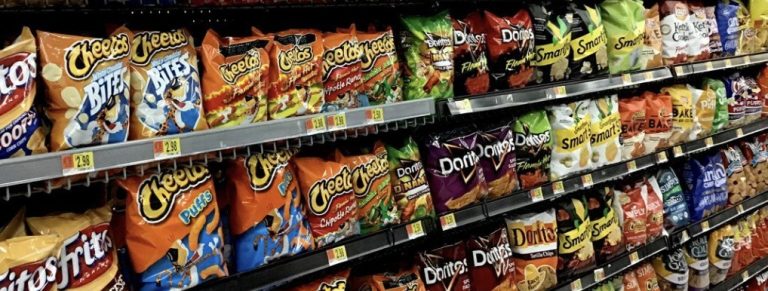
If it became a newly focused public health goal to reduce harms due to problem alcohol use in the U.S., we would expect to see something very different than a focus solely on treating a main outcome of that compulsive use of a substance, say liver disease, or on improving success rates for liver transplants. That would be absurd. Equally absurd would be a focus on prohibition or control of some sort on newer, highly appealing generations of alcoholic drinks like hard seltzers, craft cocktails, or tastier craft beers, with no expectation that making those unavailable would affect at all the prevalence of compulsive, high-risk alcohol use. Nor the prevalence of nicotine use by those dependent on it, by attempted control of more convenient or flavored vape products.
Equally absurd is the harm-predicting distraction that advocates for and predicts benefit from a focus on the availability of ultraprocessed foods, examined in this recent post. As if the substances themselves, those foods, cause the behavior of compulsive use and psychological dependence, the “addiction“.

Think about that for a minute or two and about the availability of those foods in the U.S. How many American youth and adults do NOT regularly or at least at times ingest them? And why, then, is obesity prevalence not close to 100 percent? See how easy that was?
We know what the research says about the ultimate driver of compulsive use of food (and other substances) that may be ultra-processed or not and lead to obesity, and we’ll get to that next.
But it’s well worth digressing to consider, as we did here and here, why food and its uncontrolled, compulsive use, leading to the same types of problems described in the DSM 5 diagnostic criteria for substance use disorders, have not been included in the DSM 5.

One of the main reasons seems clear – that adding food addiction to the other substances identified for substance use disorders in the DSM versions would have overtly belied the consensus conceptualization of problem substance use, or “addiction“, would have added extra absurdity to the absurdity of compulsive problem use of substances as a disease of the brain, a medical condition, a condition at all.
With rapidly growing numbers of children evidencing – by the same features and criteria that identify substance use disorders in the DSM 5 as such – food use disorder, or “food addiction”, what are we to understand?
That there are unknown forces driving a rapidly growing congenital brain condition? That population genetics have shifted in unprecedented ways? That the “addicted” children only needed to be introduced to hyper-appealing ultraprocessed foods to become addicted, their brains hijacked, while the majority of their age group, exposed to the same foods, did not?
Right.
Or, possibly, that what we know about the established relationships among childhood experiences; about childhood stress, depression and other distressing inner states amenable to the soothing that food ingestion brings; compulsive use of food for that soothing effect, aka “emotional eating” or “comfort eating”; and the outcome of obesity are exactly what explain the trends, patterns, and differential vulnerability of children.
Just as with all other substance use, more generally. There is a reason we have in our common as well as clinical language the phrase mood-altering substances.

The evidence is everywhere, most saliently, as cannot be denied, in what we observe and are aware of in human behavior in our everyday lives.
And, as well, in accumulating formalized observations and research.
As here –
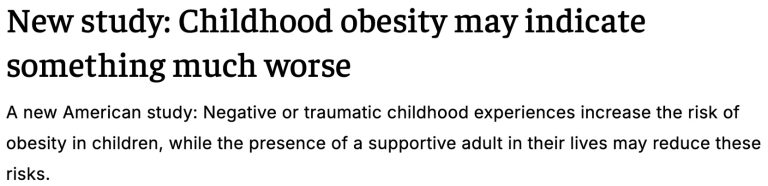
And here –

And here –

Abstract
Chronic distress contributes to the development of obesity and comorbid states. Stress is the disturbance of the complex dynamic equilibrium that all organisms must maintain, and is associated with activation of the Stress system comprising of the hypothalamic–pituitary–adrenal axis and the arousal/sympathetic nervous systems. The stress system functions in a baseline circadian fashion and interacts with other systems of the organism to regulate a variety of behavioral, endocrine, metabolic, immune and cardiovascular functions. The experience of perceived or real uncontrollable intense and/or chronic stress (distress) may lead to several psychopathologic conditions, including anxiety, depressive and psychosomatic disorders, substance abuse, obesity and the metabolic syndrome, and osteoporosis, as well as impaired reproductive and immune functions. Developing children and adolescents are particularly vulnerable to the effects of chronic stress. Both behavioral and biological pathways are involved in the connection between chronic stress and obesity in adults and children. Emotional “comfort” eating, lack of sleep, impulsive behaviours and selection of specific foods often characterize stressed individuals. In addition to specific behaviours, dysregulation of the stress system through increased secretion of cortisol and catecholamines, especially in the evening hours, and in concert with concurrently elevated insulin concentrations, leads to development of central obesity, insulin resistance and the metabolic syndrome. In children, chronic alterations in cortisol secretion may have additional effects on cognitive and emotional development, timing of puberty and final stature. Obese children and adolescents are frequently entangled in a vicious cycle between distress, impairing self-image and distorted self-image, maintaining and worsening distress.
[emphasis added]
And here –
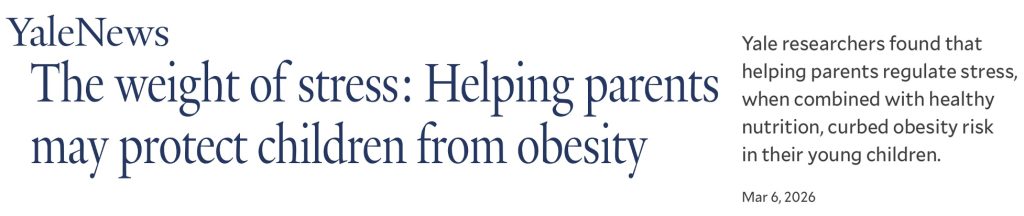
Forget “may protect”,
this study demonstrated effects that “did protect”, with a significant reduction in child stress-eating and weight when the level of parents’ stress that kids were exposed to was reduced.
Let’s take a look.
From the research report –
METHODS
A prospective, parallel, 12-week randomized controlled trial with parents who were overweight (114 dyads body mass index [BMI]: 34.7 ± 6.6) and their young children (aged 2–5 years) was conducted between November 2018 and July 2022. Parenting Mindfully for Health (PMH+N) was compared with the control (CTL+N) weekly group intervention, each with nutrition and physical activity (N) psychoeducation. Changes in child BMI and parent stress were coprimary outcomes, whereas observed parenting in an established laboratory-based parent-child Toy-Wait Task (TWT) and child food intake were secondary outcomes.
RESULTS
Child BMI z score significantly increased by 0.41 ([0.13, 0.69], P < .005) in the CTL+N, but PMH+N remained unchanged (0.20 [−0.49, 0.09], P > .17) over the 3-month follow-up, and parent stress decreased (3.17 [−5.19, −1.15] points, P < .003) only in the PMH+N arm. Significant time main effects indicated increased TWT positive parenting (2.82 [1.24, 4.4], P < .001) and reduced unhealthy child food intake (−1.78 [−3.02, −0.54]), driven by the PMH+N arm (P values <.02). Parent stress interacted with PMH+N vs CTL+N intervention to predict lower TWT positive parenting and child healthy food intake in the CTL+N arm (−1.74 [−3.26, −0.22] and −3.41 [−7.25, 0.42], respectively).
CONCLUSIONS
Targeting parent stress with healthy nutrition is effective in preventing short-term early childhood obesity risk and in improving positive parenting and child healthy food intake. Further assessment of long-term effects of the PMH+N intervention on early childhood risk is warranted.
[emphasis added]
It’s important to note that in the control group, the nutritional interventions were also provided, just not the interventions that changed the quality of the parent interactions with the children.
As described less formally in the Yale report –
But preventing childhood obesity is a complex undertaking. While encouraging a healthy diet and adequate exercise have long been two strategies for reducing risk of obesity in children, Yale researchers have recently identified a crucial third: lowering parent stress.
A research team led by Yale psychologist Rajita Sinha has found that reducing parent stress can help prevent childhood obesity in their young children.
“It’s the third leg of the stool,” said Sinha. “We already knew that stress can be a big contributor in the development of childhood obesity. The surprise was that when parents handled stress better, their parenting improved, and their young child’s obesity risk went down.” …
In addition, positive parenting behaviors such as parents’ warmth, listening, patience, and positive affect —as well as children’s healthy and unhealthy food intake — were tracked before and after treatment.
At the end, only the PMH group showed lowered parent stress rates, improved positive parenting, and reduced unhealthy eating in children along with no significant weight gain in their children at three months after treatment.
Parents in the control group did not show similar improvements in parent stress, positive parenting, or unhealthy child food intake, and their children showed significant weight increases — with a six-fold increased risk of moving into the overweight/obesity weight risk group at the three-month follow-up. Notably, the correlation between high parent stress and reduced positive parenting along with reduced healthy food intake in children remained in the control group after three months but was no longer significant in the PMH group.
“The combination of mindfulness with behavioral self-regulation to manage stress, integrated with healthy nutrition and physical activity, seemed to protect the young children from some of the negative effects of stress on weight gain,” Sinha said.
[emphasis added]
The only distortion, and a troubling one,
in that account is that the positive outcomes were a “surprise“.
Those positive outcomes have been predictable from what we have known for decades.

How is it possible that trends, evidence, and causal relationships so apparent and posing such great harm are so little recognized and so neglected? That’s a big and important question.
For now, it may be most effective to start with observations that are foundational, including that the medicalization of childhood obesity – a psychological, behavioral and psychosocial problem – misses the mark by abdication of thought and understanding, and in doing so, enables its conceptualization and formulation of prevention and treatment approaches to be controlled by “experts” entirely out of scope of practice.
That leaves us, in the media/medical/public health collusion and consensus, with harm-predicting medical approaches that have been failing for decades, protected by the value and uses of social and institutional capital.
Those lethal realities are illustrated in (medical) media accounts (and here) and in posts at ACD in which they are examined: here and here and here and here and here, for example.
And effective to start with the foundational observation that the same forces have shaped the worsening opioid crisis.
Generating persistent, transparently invalid, harm-predicting need to mystify causes and effects.
For protection.
More to come.