OPIOID CRISIS SETTLEMENT FUNDS ROUNDUP: IN CA $$ TO ADD UNQUALIFIED CRONYISM HIRES TO “TREATMENT” WORKFORCE; IN MA THE MISSPENDING IS NOT WHAT YOU’D THINK; IN LA, PARISH OF JEFFERSON – “DROP DEAD”
Settlement funds are pouring in everywhere, with community-sourced allocation decisions no less predictably harmful than if made by addiction experts
by Clark Miller
Published August 14, 2026
It could be worse.
But not by much.
What could be wrong with that?
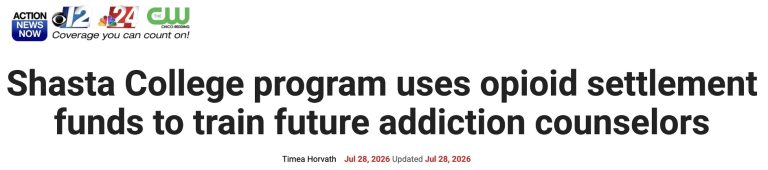
REDDING, Calif. — Shasta County is investing opioid settlement funding into workforce development, with nearly $890,000 supporting Shasta College programs designed to prepare students for careers in behavioral health and addiction recovery.
County leaders received an update Tuesday on the three-year initiative, which funds the college’s STEP-UP program and paid internships for students in the Alcohol and Drug Studies program.
“The money came to this county and we qualified for it because of the level of need,” said Sandra Hamilton, dean of student services at Shasta College.
College leaders said the first group of students graduated from the program this spring. Many participants have personal experience with addiction and are now preparing to help others facing similar challenges.
“So many of these students are passionate about this work because they themselves were addicts and they just want to help so by completing the internship they’re able to work in these areas locally,” said Jenny Beckman, director of career services at Shasta College.
Hamilton said the program has also helped students who have faced obstacles, including addiction and incarceration.
“Addictions as well as being formerly incarcerated brings a lot of baggage for students, it’s a stigma and a label that students still deal with and so being able to be recognized and given the support despite their background is very rewarding for them, it gives them the motivation to continue to know that they are on the right track and that people see the efforts they’re putting into to turn their lives around,” Hamilton said.
[emphasis added]
Wow. Where to start?
Possibly with the simple recommendation to Shasta College staff that to credibly take the position of concern about addiction and its treatment misunderstood as “a stigma and a label”, staff should avoid referring to these students as “addicts”.
But wait a minute. That goes straight to the glaring, lethal contradiction represented by what the College is doing with settlement funds. Because the students are “in recovery”, meaning not that they are engaged in the psychological or mental health therapies that are the only evidence-based, real treatments for compulsive substance use, meaning instead that they are acolytes and engaged in meetings and practices of the bizarre religious subculture Alcoholics Anonymous (or Narcotics Anonymous), which, at the same time both:
1) Remains the core curriculum of essentially all substance use treatment programs, is routinely mandated by courts, and is identified by top U.S. addiction experts as effective or even gold standard treatment, and
2) Is established as predicting failure rates of 90 to 95%, almost certainly more harmful than no involvement, and requires adoption of the identity of an “addict” or “alcoholic”, along with additional, self-degrading and counter-therapeutic exercises e.g., focusing on defects of character, weakness and powerlessness, and a disease state, in this case both medical and spiritual.
It is what they practice, what they know, and what they will bring to others who truly need help, when they begin receiving salaries as “addiction counselors”.
Some of that is covered here, in a post from a few years ago.
Drawing from a couple of decades of direct observations in that field,
including as a trainee, as a licensed therapist, and in program development and supervision, I convey with absolute confidence that most or all of those students, like almost all future hires as “addiction counselors”, are “in recovery” and engaged in AA or NA.
The perks are great! A low-paying job that requires no competence in delivery of evidence-based therapies as real treatment for compulsive substance use. Preferential recruitment (as at Shasta College) and hiring, thanks to the evolution of U.S. “treatment” systems as cronyism systems in which AA acolytes, “addicts”, rose up through the ranks and gained the power to hire those who know the true path to recovery, the spiritual path, just as they do. Anyone who has worked in the field has seen this, as chronicled here.
It’s a win-win. Those low salaries really help with profits for the criminal operations known as “rehab” and “addiction treatment”. And those future addiction counselors were not going to make it through a college degree, graduate work, and demonstrating the ability to competently deliver real evidence-based therapies to gain licensure. Thank Higher Power for cronyism.
Maybe we shouldn’t be surprised that “addiction treatment” does not work and never has.
For an uncomfortably close, direct, real look at how that workforce performs in real settings, providing “treatment” to individuals at risk of death due to the complex psychological and behavioral condition of compulsive substance use, go to this lengthy post and scroll down to the section, “Let’s think about lived experience and being in recovery“, then read through also and especially the following section with profiles of real “addiction counselors” in those roles, “Lived Experience and Profiles “In recovery”
Remember Oregon’s failed attempt at decriminalization? To understand the lethal effects of the cronyism system we are considering here, go back up to the top and read more of that post. For an understanding of the role of know-nothing cronyism beneficiaries, including in closed-door meetings of Oregon Health Authority (OHA) to formulate clinical practices to implement Measure 110 and recruit high-risk drug users into treatment, be sure to read material following the headline for the excerpted Filter magazine piece.
How did all that work out for implementation and success of Oregon’s decriminalization experiment? An excerpt from a post-implementation post –
That’s right, 0.85% means less than 1 percent. Engagement in treatment by less than 1 in 100 Oregonians encountering the new Measure 110 processes envisioned by implementors of Measure 110 to lead them into treatment.
That’s the 2-year “rocky start”, but hopes are up,
it’s right there in the headline, so there must be evidence for progress.
Steve Allen, behavioral health director of the Oregon Health Authority, acknowledged the rocky start, even as he announced a “true milestone” has been reached, with more than $302 million being sent to facilities to help people get off drugs, or at least use them more safely.
. . . Tera Hurst, executive director of Oregon Health Justice Recovery Alliance, which is focused on implementing Measure 110, said coerced treatment is ineffective. Hurst said it’s important to focus on “just building a system of care to make sure that people who need access can get access.”
. . . Allen called the outlay of million of dollars — which come from taxes on Oregon’s legal marijuana industry — a “pivotal moment.”
“Measure 110 is launching and will provide critical supports and services for people, families and communities,” he told the Senate committee.
That’s a very brave face Oregon Health Authority’s (OHA) head Steve Allen is putting on the efforts of Oregon Health Authority to implement the changes voters are expected. Efforts including populating implementation committees with individuals with no competence or qualifications to contribute to those determinations, but as peers and with “lived experience”, that is histories of problem drug use.
Those peers, with employment positions in Oregon’s cronyism treatment systems, were able to function effectively in closed-door meetings with legislators soon after 110 passage in order to remove clinical standards in the measure as passed and intended but that would have been a barrier to more hiring of peers in cronyism systems. That’s how that works.
Some of the first use of Measure 110 resources was to hire more peers, but unfortunately that hasn’t gone so well. As described here and reported last year by OPB –
The recovery community individuals and organizations are highly competent at something else: protecting, including in closed-door meetings with Oregon legislators, access of members of their organization to cronyism employment in Oregon’s sham addiction treatment industries.
Some of those employed, with public funds, are “peer support specialists”, their paid employment predicting perpetuation of worsening substance use epidemics, as explained here and here.
How’s that going these days, the work of paid peers promoted as effective and important by “recovery leaders” (former drug users who have worked to ensure Measure 110 funds continue to fund failed systems that provide cronyism employment to other members of their “recovery community”) ? Not so well, as reported by NPR. So many of these addiction treatment professionals are returning to problem drug use themselves, that their positions are unfilled. Who could have predicted that?
Several organizations contacted by NPR said the number of people relapsing, anecdotally anyway, has skyrocketed.
In fact, some groups say they’re having trouble finding enough peer counselors because so many are back using.
“The relapse numbers have gone up so much,” says Elly Staas with the 4th Dimension Recovery Center in Portland.
Back to our current post.
There’s more, lots more, and for now, let’s move on
to Massachusetts, where some settlement funds spending got called out
by our watchdog press.
Opioid settlement funds are supposed to be used to mitigate the harm caused by the opioid epidemic, yet most Massachusetts communities haven’t spent the money, and others have reported questionable purchases. …
5 Investigates teamed up with Northeastern University’s School of Journalism, submitting public records requests to every community in the state to see how they’ve used the money. While some communities haven’t spent a dime, others have used the money to buy stadium lighting, vape detectors and outfitting a police vehicle with new paint and tinted windows. …
In Newburyport, a new $8 million Recreation and Youth Services Center is being built, due in part to $340,000 of opioid settlement funds.
Newburyport’s mayor justified the spending, saying the center will serve as “a hub for prevention, wellness, and access to services.” …
Despite having 135 opioid-related overdose deaths between January 2020 and December 2024, Pittsfield hadn’t spent any of the $1.6 million in opioid funds it received until recently. …
The city started spending some of the money, including $55,000 on a community liaison to support people in recovery, $10,000 on a grant for community legal aid and $32,000 on a co-responder clinician for the police department.
A city spokeswoman detailed another $287,000 in projected allocations for a peer support program, substance use medication program and a recovery coach.
[emphasis added]
So …
Stadium lighting (described in the news piece as valuable in detecting youth vaping) and vape detectors will worsen things in multiple ways; we know that.
But that recreation and youth services center decried by the piece? That potentially could be some of the most effectively allocated of settlement funds, but only if there are successful efforts to provide professional staffing who would, like caring teachers in schools, attune to the emotional states and needs of the children they encounter, take time to relate to them, and make the needed reports to protective services when they become aware of instances of the common features of American families at the root of risk of substance use and other problems for a largely ignored population at risk.
“support for people in recovery“?
“peer support“?
“substance use medication program“?
All predict harm, as established.
The investigative news piece shifts in tone as we are asked to consider the travesty of a recovery home for recovering addicts unable to secure significant settlement funding.
Barbara Gillmeister had asked Pittsfield for some of their funding.
She runs Gilly’s House, a sober home for men in Wrentham. She opened it after losing her son to a heroin overdose in 2016. …
Gillmeister said overall, accessing the opioid funds has been “extremely difficult.” One day, she went to six different town halls to make requests. Despite all those visits, she said she “really came home with no information about either how much money they had or how they were spending it, or how to apply for it.”
“There’s lots of money out there and lots of money that’s just not being spent,” she said.
How could that not be a great use of settlement funds? To pay the expenses at a for-profit sober house for men who get to be with those of their own kind, other “addicts”? Keeping each other on track, along with the regular AA meetings? A setting where they can work the 12 Steps?
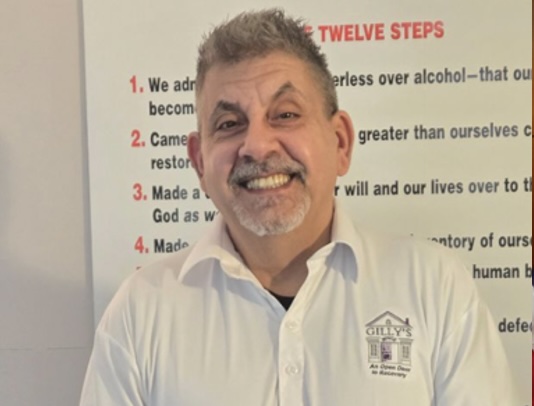
And the staff at Gilly’s? Where the failure-predicting, counter-therapeutic, bizarre prescriptions and practices of a religious subculture are provided as “treatment”? Where men at risk of returning to high-risk use and risk of death need real, evidence-based treatment, not a 90+ percent probability of failure?
Here’s the staff of “highly trained professionals” providing the care the men there will need to overcome histories of compulsive substance use.
Surprised?
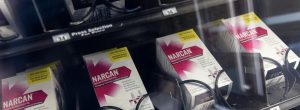
It’s lethal, as is almost all of what settlement fund spending will support outside of that for emergency naloxone campaigns to moderate deaths generated by gold-standard treatments.
Let’s move on to Louisiana and the Parish of Jefferson,
where the state’s worst opioid outcomes are in stark contrast to neighboring New Orleans, achieving remarkable drops in fatal ODs over recent years due to investment in naloxone campaigns (upcoming post: “ANOTHER CITY, SAME STORY: IN NEW ORLEANS, NALOXONE REVERSALS HIDE A WORSENING OPIOID CRISIS DRIVEN BY LETHAL FAILURE OF EXPERT TREATMENTS”).
From this effective report –
The conservative-leaning, suburban parish — where many move to for lower property taxes and quieter neighborhoods than in neighboring New Orleans — has the highest rate of opioid-related overdoses in Louisiana, more than any other parish in the state according to data published by the Louisiana Department of Health. …
Before advising Jefferson Parish, Babcock worked for the city of New Orleans from 2013 until 2021. In 2017, as New Orleans was facing a dramatic uptick in opioid-related deaths, the city’s health department worked to distribute naloxone across city services, using geographic data provided by the city’s Emergency Medical Services to map where overdose calls were occurring. The Health Department used that data to then figure out where to distribute naloxone.
This was part of a strategy called harm reduction, an evidence-based public health approach that seeks to offer resources that minimize the risks associated with drug use — like offering fentanyl test strips, clean syringes and naloxone to those who use drugs — and is shown to be an effective public health approach, increasing the likelihood that people who use drugs will enter treatment, lowering mortality rates and the spread of disease.
“So, personally, what I’ve seen as I’ve worked in both parishes is that Orleans Parish took a much more proactive response stance early on in this epidemic, and Jefferson Parish has, in many ways, moved slower to address it,” Babcock said.
[emphasis added]
That’s putting it graciously, isn’t it?