JUVENILE TYPE 2 DIABETES HAS SURGED 10-FOLD, LINKED TO VAPING, AMERICAN FAMILIES, AND FAILED PUBLIC HEALTH
Forces tied to the latent epidemic are in the homes, schools, and cultures of vulnerable kids, worsening their risk and hidden from view
by Clark Miller
Published September 18, 2026
The outcomes of the new research, reported here, are both disturbing and predictable.
Type 2 diabetes has traditionally been a disease that has affected mostly middle-aged and older adults. But new research from the U.S. to be presented at the Annual Meeting of the European Association for the Study of Diabetes (EASD) in Milan, Italy (Sept. 28–Oct. 2) shows a sharp increase in the rate of new cases of type 2 diabetes since the turn of the century, which has continued to accelerate in recent years. The study is by Dr. Tessa Crume of the Colorado School of Public Health in Aurora, Colorado, and colleagues. …
The authors say, “Across this period of over two decades since the turn of the century, new-onset type 2 diabetes incidence in youth increased by almost 10-fold, compared with type 1 diabetes incidence that only slightly increased. These findings document an expanding population of youth at risk for diabetes-related complications across the life course and underscore the importance of sustained long-term surveillance.”
Dr. Crume explains, “A generation ago, type 2 diabetes in a teenager was so rare that many pediatric clinicians could go through much of their career without seeing a case; it was a disease of middle age. In Colorado, we have now watched it rise nearly tenfold in young people in just two decades, and the increase is accelerating rather than slowing.
“This is not a local anomaly: in the U.S.-based SEARCH for Diabetes in Youth study, youth type 2 diabetes is climbing more than twice as fast as type 1, and among older teenagers new type 2 cases have already overtaken type 1. A disease we once considered exclusively adult-only, type 2 diabetes, is now outpacing the classic form of childhood diabetes—type 1.”
[emphasis added]
The authors highlight the unique potential severity of type 2 diabetes mellitus (T2DM) in juveniles.
And she concludes with a stark warning about the tidal wave of health problems coming for these and other young people. “The danger is considerable, and it is why these trends matter so much. Type 2 diabetes in a young person is a more aggressive disease than the same diagnosis in a middle-aged adult.
“The insulin-producing cells of the pancreas decline faster, blood sugar is harder to control, and complications affecting the kidneys, eyes, nerves and heart can appear within just a few years rather than decades. A child diagnosed at 14 faces the prospect of these complications in early adulthood, and youth-onset type 2 diabetes is associated with a shortened life expectancy.
“While newly diagnosed type 2 diabetes can sometimes be pushed into remission, the evidence in young people is sobering. Lifestyle change alone has proven markedly less effective in adolescents than in adults, and many young patients require medication and still struggle to maintain control.
“While newly diagnosed type 2 diabetes can sometimes be pushed into remission, the evidence in young people is sobering. Lifestyle change alone has proven markedly less effective in adolescents than in adults, and many young patients require medication and still struggle to maintain control. That is exactly why early-life prevention at the family and community level is essential.
“The most effective changes are shared across the whole household rather than placed on the child: everyday habits like family meals, water over sugary drinks and being active together.
[emphasis added]
As we’ll see, that informed, evidence-based admonition –The most effective changes are shared across the whole household rather than placed on the child – has a deeper, darker, more real and urgent meaning than has been tolerated, so far, its avoidance protective.
What the report does not message or address are the underlying forces dominating cultural, social, public health, media, medical, and institutional dysfunction that have ignored the surges despite early warning signs over past years.
Let’s take a look
I can imagine that something that might gain near universal agreement is that the “Why?” here is critically, fundamentally important, in this case, to explain an unprecedented, unforeseen surge in juvenile prediabetes andT2DM with potential for grave public health outcomes.
We do know, it is established, that a juvenile obesity epidemic is underway and that obesity is a major, known risk factor for diabetes in youth.
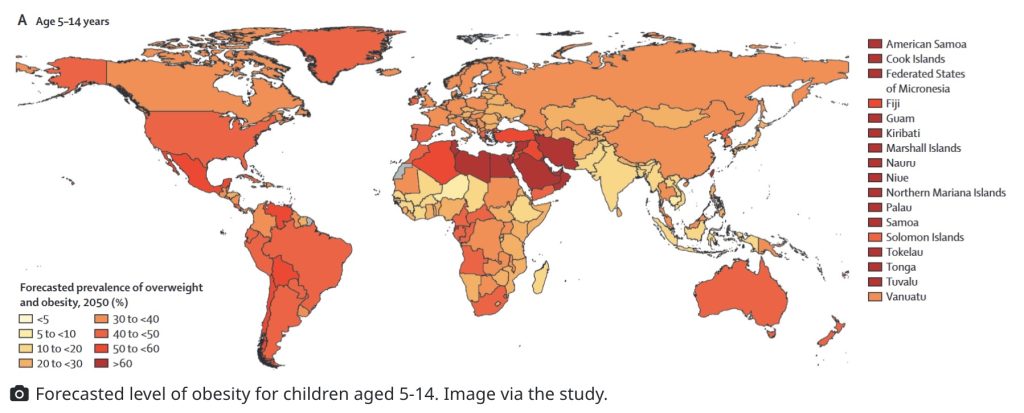
Here’s something much less well known, affirmed, or acknowledged, despite being as solidly grounded in evidence: that childhood obesity represents effects of compulsive, excessive use of foods to relieve inner distress no less than – and understood by the same psychological, developmental, and behavioral drives involved in – adult liver damage or sleep disturbance represent effects of compulsive, excessive use of alcohol to relieve inner distress. Or methamphetamine, or oxycodone.
That is, as described here more thoroughly (scroll down), compulsive use of food in children is no different than the problem of compulsive use of other substances (alcohol, methamphetamine, oxycodone) in adults and generally.
And here’s something even less known, affirmed, or acknowledged, despite it being clear, overtly apparent, incontrovertible.
Those expert assurances in top, authoritative media, swallowed whole and repeated nearly daily, that American youth are doing so much better related to problem substance use, health, mental health, and well-being, did not address at all the linked, lethal epidemics of juvenile stress in their own homes, driving compulsive use of food, driving unprecedented epidemics of obesity and type 2 diabetes.
And here’s something even less known than that, despite it being solidly established in recent research, explained, for example here, and here.
Even considering the dramatic rise in juvenile obesity over recent years, the increased prevalence of pediatric obesity cannot explain the rise in juvenile T2DM.
Youth vaping can and does explain it, the emerging evidence including this recent research directly linking vaping to diabetes.
There’s a fair question here – if nicotine itself is directly involved in the youth diabetes surge, why was juvenile type 2 diabetes so rare over the past decades when cigarette smoking was not uncommon among youth?
Part of the answer may well be that vaping has been taken up by much younger and more physiologically vulnerable kids than cigarettes were when they were essentially the only nicotine delivery system.
With certainty, the answer includes that vaping has been delivering to young users nicotine in concentrations much higher than those from smoking traditional cigarettes, as described here.
Are dose-response explanations valid in understanding epidemiological trends and effects, for example, considering misuse of alcohol, opioids, stimulant medications, food, and just about any other compulsively used substance?
Right.
But back to the “Why?” –
the critically important identification of root causes necessary to effectively formulate prevention, treatment, social, and public health approaches and responses.

We would do well to start with a very recent, very large study, described and discussed here, published in JAMA, where lead authorLead author Christopher Forrest, MD, PhD, of Children’s Hospital of Philadelphia addressed the remarkable breadth of symptoms, chronic medically-treated conditions, and illnesses that have worsened as pointing to and demanding identification of underlying driving factors, “underlying systemic factors that are influencing the health of children more broadly [tied to] the developmental ecosystems where children live and grow”.
“the developmental ecosystems where children live and grow”
In a remarkable exchange, Forrest is asked, in an interview with WBUR’s Meghna Chakrabarti, about his assertion and insistence that –
“There’s something happening in the developmental ecosystem of kids. And in some ways we all take responsibility for this because it’s been happening in our backyards.”
CHAKRABARTI: Yeah. In our backyards and in our own homes, right?
FORREST: Yeah.
From that post –
That’s no mystery. Obesity in adults, as in kids, is the result of unhealthy diet combined with compulsive, inner-distress-driven use of excess calories for soothing, reflecting stress and other forms of poor mental health, often reflecting early adverse childhood experiences (ACE) that set them up developmentally, psychologically, and physiologically for challenges in regulating emotional responses and for an array of emotional, behavioral, and physical conditions of illness.
That is, the effects on health and mortality of American children represent forces acting full circle and generationally “in the developmental ecosystem of kids” and their parents “in our own homes” to generate emotional injury, compulsive substance use, and associated transgenerational harms.
CHAKRABARTI: Wow. Okay. So then, I mean, you talked about some mental health — deterioration in mental health. That also includes — these are things I think people have heard of and probably even experienced in terms of the lives of children that they know — more anxiety, greater amounts of loneliness, higher reports of depression. You even talked about like fatigue and pain, experience of pain going up in kids.
FORREST: I know. That’s really, as I mentioned earlier, I think that was one of the big surprises to me, that things like fatigue, pain, abdominal symptoms, menstrual symptoms for teenage girls, headaches, this sort of physical symptomatology has been increasing.
But Meghna, we know that kids are experiencing an increasing amount of stress. And that stress manifests itself in some kids as anxiety and in some kids as pain. You know, it gets very challenging to kind of pinpoint any one cause, because one cause can produce multiple conditions.
America’s kids are stressed to the point of generalized, chronic illness and a mental health crisis, in their homes, their increasingly unsafe communities, in their world of live-streamed genocide, in their schools.
Unable to gain the stabilizing emotional connection they need from their stressed, overwhelmed natural support systems, they increasingly, compulsively use – as is modeled for them by the adults in their lives – substances like food, nicotine, THC, and misprescribed amphetamine, for episodic relief that comes at the cost of unprecedented incidence of obesity and looming, latent epidemics of diabetes, nicotine dependence, and associated illness.
While media and top experts celebrate their well-being as a remarkable public health achievement. And get away with it.
Because we don’t care enough.
[Back to our current post]
And because some things must remain hidden.
The research and other material from the post we’ve excerpted from is nearly sufficient to answer our very important “Why?”. As such, it is highly recommended for readers here, who have, after all, enough interest in this material to be reading this. That post, again –
Nearly sufficient, but not.
Establishing the links more strongly and generally is the large body of evidence integrated under the Adverse Childhood Experiences (ACE) model that predicts elevated risk of problem substance use, obesity, and other chronic conditions based on psychological and emotional injuries and distortions inflicted on children through childhood.
By whom?
By those surrounding them and in positions to expose them to those experiences.
Much more immediate for us is the large and accumulating body of evidence causally linking experiences of millions of American kids affected by COVID-era disruptions and by being in a household with opioid abusing parents. See those posts for examples of the research and evidence establishing the predictable effects on kids’ risk of compulsive, problem substance use due to childhood harms.
So, from what we know, what are established as causal links among:
adverse childhood experiences –
childhood stress and other forms of inner distress –
compulsive use of substances including nicotine to numb, soothe, or otherwise impair awareness of the distress –
and the initiating, driving role of family dysfunction and infliction of adverse experiences on children –
The quotes from our first report examined, above – about the “essential” nature of “effective changes” and “early-life prevention at the family and community level” in the “household” – take on their real meaning.
The changes required are in the behaviors of adults surrounding children, in homes, in schools, and other settings.
And in the institutional and public health barriers to protecting them.
Possibly more than ever before, kids need to be protected from adults in their lives, in their schools, in their homes, often their parents.
They need to be protected from the esteemed experts and their media mouthpieces whose lies mask the real, grave severity of their problem substance use, protected from expert lies that diminish the real risks they face, from the abject adult incompetence that keeps them at risk of lethal harm.
They are dependent on us for that.