DEVIANT MEDIA OPIOID CRISIS REPORTING: REAL, INSIGHTFUL, FROM THE STREET
Beginnings of surges in hidden, high-risk opioid use and overdose began years ago, now increasingly hide a worsening crisis
by Clark Miller
Published February 6, 2026
The anomalously unsuperficial, substantive, legitimately grounded reporting echoes more recent, remarkably honest accounts (here and here and here) of the stark reality of high-risk opioid users repeatedly and increasingly overdosing and reviving each other (or being “Narcaned” by family members or other laypersons) without contact with services that would lead to formal reporting or database collection of any type – but from more than 4 years ago, providing clear warnings that were easily and by necessity ignored.
“By necessity” because of what that means, that increasingly, non-fatal opioid overdoses (= high-risk opioid use) have been undercounted, not recognized, “hidden” – what that says about the success or failure of expert, gold standard opioid crisis cures. But we’ll get to that.
This wasn’t the first time Jeremiah administered Narcan and reversed an overdose: He says in the past, he revived his neighbor, a stranger in El Cerrito, and two people in Downtown Oakland. But none of these overdose reversals will show up in public numbers. Paramedics weren’t called, police weren’t deployed. And that’s because members of the unhoused community and people who use drugs are reversing hundreds of overdoses each year in Alameda County themselves, without involving public services or officials.
This makes the true scale of the overdose crisis somewhat invisible: Government recordkeeping currently does not reflect the extent to which people who use drugs are keeping each other alive. Without this information, how can public health programs best support the unhoused people who are battling overdose?
(emphasis added)
“Without this information …”
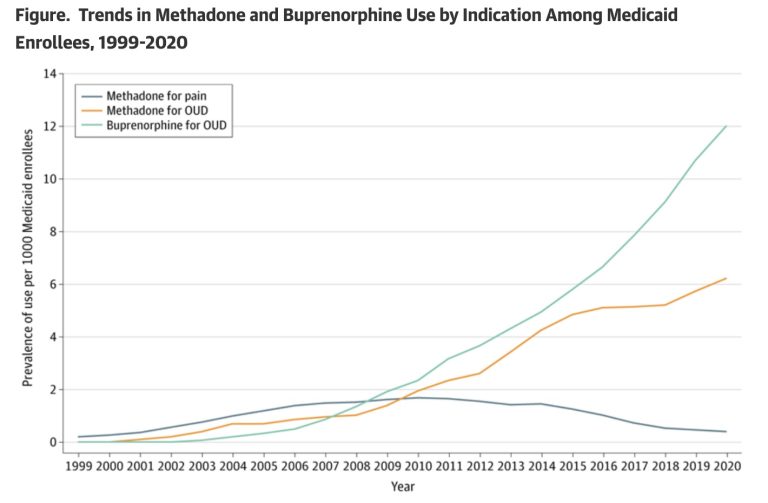
That was an important question in 2021. And increasingly, as magnnitude of those undercounted, “hidden” instances of high-risk opioid use and overdose increase, additional questions become pressing. Like the question of what we are compelled to conclude when America’s gold standard opioid crisis treatments are increasingly dispensed and provided over decades of the crisis (are in fact essentially with unlimited access and at little cost), their only mode of effectiveness, only means of benefit being the prevention of high-risk use – and opioid high-risk use continues to mount. Continues to mount, necessitating desperate, intensive naloxone campaigns as harm reduction to avert fatal overdoses by emergency intervention.
But let’s get a better picture of what’s been going on in ecologies of high-risk opioid use.
From the OKLANDSIDE piece –
Oakland accounts for more overdose emergency calls than any other city, roughly half of the county’s total. But emergency responders are only dispatched when a community member reverses an overdose if the person chooses to call 911.
In the first story in this series, we spoke with Thad, a 36-year-old resident of North Oakland. Thad has survived three overdoses since the pandemic began, all after smoking fentanyl.
Since his first overdose in 2020, Thad estimates he’s been present for at least 10 overdoses where he administered Narcan, or helped. It’s fairly common to witness overdoses when you’re around drugs, he says. …
Alameda County urges anyone who witnesses an overdose to call 911. But people using drugs told Street Spirit that they may only call 911 for assistance during an overdose if they don’t have enough Narcan on hand, or if someone is very ill.
“The community has become so intimately acquainted with reviving others themselves, and that is such a regular occurrence, that I don’t think people bother with 911 a lot,” explains Katie O’Bryant, of the harm reduction group West Oakland Punks With Lunch. O’Bryant was houseless for over 10 years and describes herself as a longtime drug user. She also notes that community members do not trust law enforcement, which sometimes responds to 911 calls. …
Thad, like many unhoused people who use drugs, obtains Narcan from outreach workers with local harm reduction organizations like West Oakland Punks With Lunch. …
Every time they give out Narcan, the Punks ask participants if they’ve had to reverse an overdose in the last week. Outreach coordinator Katie O’Bryant says they always hear at least three yeses.
During the pandemic, verbal reports of overdose reversals have also increased. “It’s been pretty drastic,” confirms Ale Del Pinal. “As a really small organization, we saw 670 overdose reversals [in 2020], compared to the 400-and-something from the year before.” This does not include the number of overdoses that have been reversed by the participants of the other harm reduction groups in Alameda County.
Compare this to the county’s totals: EMS workers in Alameda County responded to 716 overdoses in the whole of Oakland in 2020—not just in West Oakland, where Punks with Lunch operates.
This data paints a picture: unhoused people and people who use drugs are the primary first responders to overdoses on the street.
(emphasis added)
In nearby San Francisco, a very similar situation was being reported.
In 2018, San Francisco paramedics administered naloxone to 1,647 people, up from 980 two years earlier, according to numbers from the city’s emergency response system.
That compares with 1,658 naloxone-induced overdose reversals last year by laypeople, most of them drug users, according to self-reported data from the DOPE Project, a Bay Area overdose prevention program run by the publicly funded Harm Reduction Coalition. That’s nearly double the 2016 figure.
“People who use drugs are the primary witnesses to overdose,” said Eliza Wheeler, the national overdose response strategist for the coalition. “So it would make sense that when they are equipped with naloxone, they are much more likely to reverse an overdose.”
The widespread availability of naloxone has radically changed the culture of opioid use on the streets, Hogan said. “In the past, if you OD’d, man, it was like you were really rolling the dice.” Now, he said, people take naloxone for granted.
“I feel like as long as there is Narcan around, the opiates can’t kill you,” said Nick Orlick, 26, referring to one of the brand names for the overdose reversal drug
They employ various methods to reduce the overdose risk. Some, like Daniel Hogan, take methamphetamine or smoke crack between injections to keep themselves alert. Another technique is to delay the full dose by pushing the plunger only partway down.
If gathered as a group, they often stagger their fentanyl use so one of them will be physically able to administer naloxone.
It’s not just Oakland and not just the Bay Area. As described here, and here, and in this post, it’s everywhere, built into the evolution of a worsening opioid crisis that, lacking any provision of evidence-based treatments for compulsive opioid use, relies entirely on emergency naloxone campaigns as harm reduction against the lethality of exeprt “treatments”.

America’s “invisible” continuing surge in high-risk opioid use and overdose that points incontrovertibly to lethal failure of expert treatments and public health approaches is not really hidden. It’s there to see for anyone who dares. And ultimately for all, as it unfolds and unravels on its course.